The Mission Behind HDI.Vision
The world already has screen time trackers and mindfulness apps. What it lacked was a system that measures the full depth of your relationship with technology - and builds a science-based path to change. HDI.Vision was built to fill that gap.

Our Mission
To give every person and organization the tools to build a conscious, healthy, and resilient relationship with digital technology.
Not by demonizing technology. Not by preaching digital detox. By measuring what's actually happening - and building the behavioral infrastructure to change it. "Observo cogitationem meam." I observe my own thought.
The Founder
Tomislav Krištof
Senior Lecturer and PhD Candidate in Digital Behaviour at Algebra Bernays University, Zagreb - one of Croatia's leading technology-focused universities.
For years, Tomislav watched students, professionals, and entire organizations struggle with technology they couldn't name. They weren't lazy. They weren't weak. They were operating without a map. The Human Digital Index was built to give them one.
The HDI model draws on cognitive psychology, behavioral neuroscience, organizational behavior research, and years of direct work with Algebra employees - who became the first cohort to experience the full assessment-to-education cycle before a single public program launched.
"I spent years watching people suffer from something they couldn't measure. Burnout that looked like laziness. Anxiety that looked like distraction. Addiction that looked like productivity. The Human Digital Index was built to name what was always there."
Tomislav Krištof
Founder, HDI.Vision
How HDI.Vision Was Built
Not in a weekend hackathon. Not by a startup team chasing a trend. Over years - inside a university, with real people, validated against real behavior.
The Research Foundation
Tomislav's PhD research at Algebra Bernays University focused on digital behaviour patterns in educational and organizational settings. Hundreds of participants. Validated instruments. Peer-reviewed methodology. The HDI is not an opinion - it's a measurement system.
Validated at Algebra Bernays University
Before any public launch, Tomislav ran the full HDI assessment-to-education cycle with Algebra Bernays University employees. The feedback was unambiguous: participants named patterns they had felt for years but never been able to articulate. The program worked. That was the signal to go public.
Schools, Students, Organizations
Programs expanded to secondary schools and other educational institutions in Zagreb. Each cohort sharpened the frameworks. The 3D, 3S, 3N, 3O, 3F, and 3A intervention models - 15 behavioral pillars - emerged from direct interaction with hundreds of participants across different age groups and professional contexts.
HDI.Vision Launches Globally
In 2026, the full HDI.Vision platform - assessment, education, and organizational consulting - became publicly available. English first, to reach the global audience this problem demands. The test platform at test.hdi.vision runs independently, purpose-built for assessment delivery and result reporting.
Original Intellectual Property
Every framework on this site is original work by Tomislav Krištof - first published on hdi.vision. These are not borrowed concepts with new labels.
Entry Point Model
Divert · Discomfort · Delight
Instead of resisting technology through willpower - which digital overload has already weakened - the 3D Model teaches you to replace the stimulus. Divert the dopamine flow toward a competing reward (Divert), accept the short-term friction (Discomfort), and discover the activity where you lose track of time (Delight).
Separation · Solitude · Success
Nourishment · Nurture · Natural
Outdoors · Others · Outstanding
Faith · Forgiveness · Fortitude
Alertness · Awe · Achievement
Focus · Filter · Flow
All models - Human Digital Index, digitality, Digital Sadness Generation, 3D / 3S / 3N / 3O / 3F / 3A / 3F2 - are original works by Tomislav Krištof, first published on hdi.vision. © 2026 Tomislav Krištof, HDI.Vision. All rights reserved.
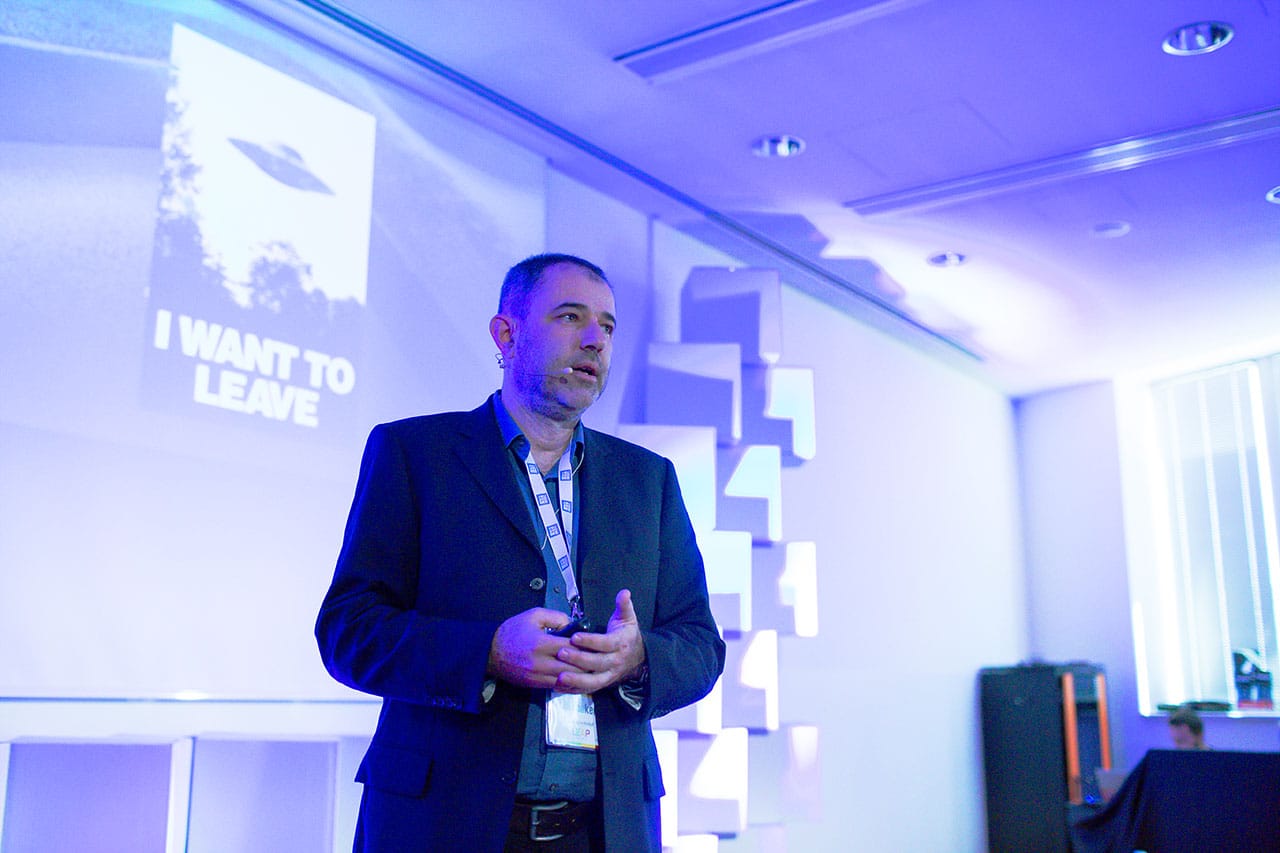

"After completing the education program and the HDI assessment, our faculty members realised how much of their day - and their focus - they were unconsciously giving away to digital noise. The framework didn't shame them. It gave them data, language, and tools. Several described it as reclaiming a part of themselves they hadn't noticed was missing."
The HDI program was piloted with faculty and staff at Algebra Bernays University College in Zagreb. Participants went through the full cycle - education workshops, individual HDI assessment, and results review. Those who engaged most deeply consistently reported the same shift: from feeling controlled by technology to feeling in control of it.
That shift - from passive digital consumer to intentional digital actor - is what every HDI program is designed to produce.
How We Work
Evidence first
Every claim we make - about screen time, attention loss, digital fatigue - cites peer-reviewed research. We don't run on fear. We run on data.
Empathy over judgment
We don't tell people they're addicted and doomed. We show them what's measurably happening and give them the tools to choose differently - without shame.
Measurable outcomes
Every program ends with re-assessment. We track score changes. If a program doesn't move the needle, we redesign it. That's the difference between education and performance.
Start With a Conversation
Whether you're an individual curious about your own digital patterns, a school looking to support students, or an organization ready to address digital fatigue - we'll find the right starting point.
Pilot Program
Not Ready to Commit? Start with a Pilot.
Assessment for up to 15 people, one workshop session, full team report - €500. Applies toward any full program if you continue.
Request Pilot Program