Adults seeking everyday digital wellbeing education · 4 min read
What goes into the space when you use a screen less?
Make room for a valued activity by choosing something small, accessible and suited to the need the screen was meeting.
Using a screen less does not tell you what to do instead. If you want more room for something that matters, name that activity first and make its first step possible. Otherwise, the newly available time may simply fill with another easy activity, extra work or the discomfort of having no appealing plan.
Begin with what you miss
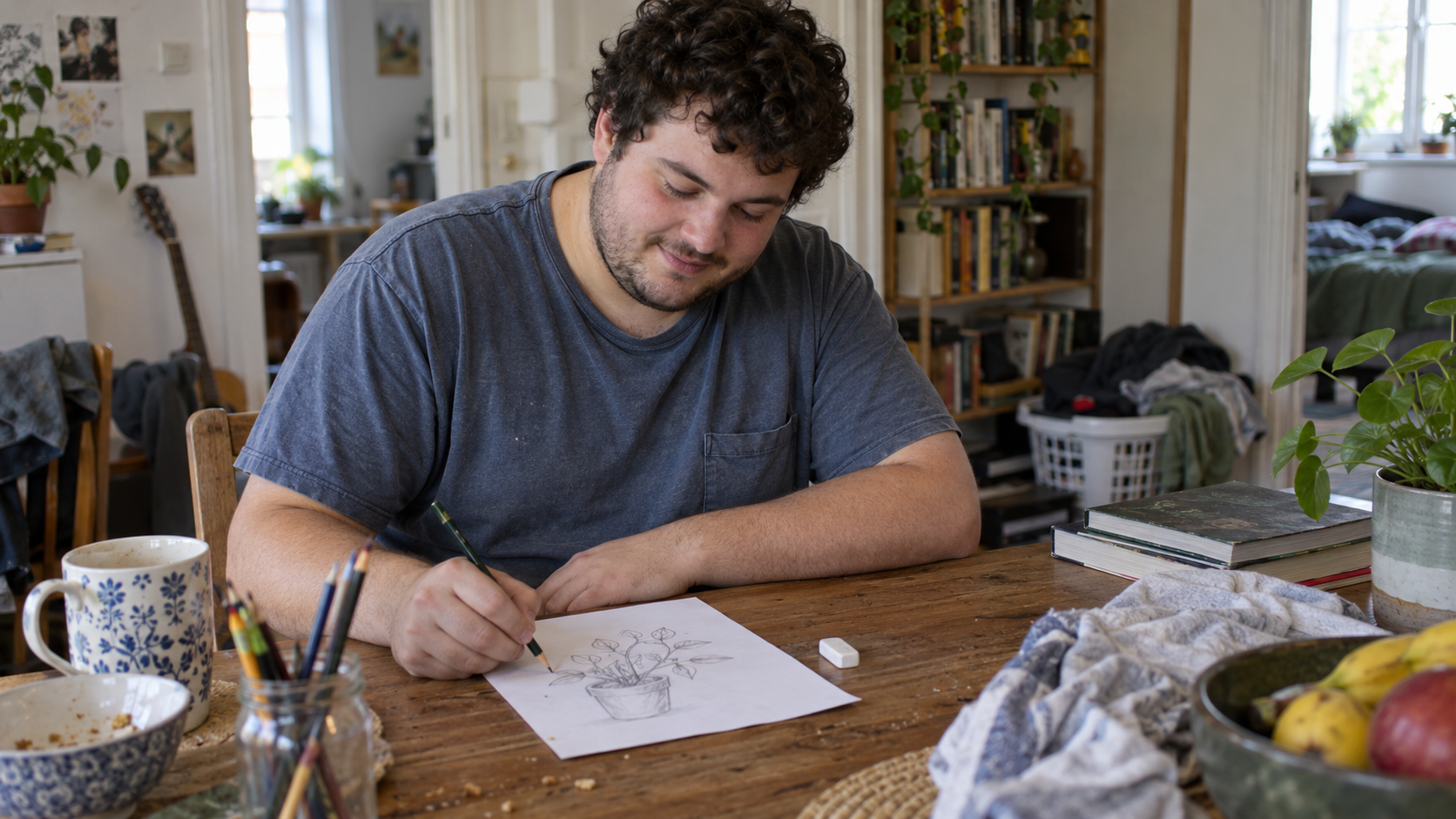
Imagine someone who says they want to spend less time scrolling because they miss drawing. Their sketchbook is packed away, the table is full, and they assume a drawing session requires an uninterrupted hour. This is a fictional example, not a research finding.
A small change could be to leave a pencil and scrap paper on one clear corner. The relevant success is making a drawing, however modest, rather than winning an argument with a screen-time dashboard. Another person might prefer calling a friend, growing herbs, listening to music or doing nothing for a while.
Meaningful does not have to mean impressive. An activity can matter because it is pleasurable, familiar, useful, shared or freely chosen. You do not need to convert every recovered minute into achievement.
Freed time can go in several directions
In a randomized Facebook deactivation study, Allcott and colleagues found that participants shifted time toward several offline activities, including socializing and watching television. The study concerned US users around an election. It does not show that reducing any app automatically produces a richer daily life.
That distinction matters when making a plan. “Less of this” and “more of that” are separate decisions. You may welcome the alternative that emerges, but it helps to identify what you hope the change will make possible.
Research on everyday habit formation by Lally and colleagues supports the relevance of repeating an action in a stable context. It does not establish a fixed timetable for your new hobby. The application here is to give a small activity a recognizable place, without turning it into a rigid streak.
Match the alternative to the actual need
Ask what the screen activity was providing. If it offered company, a solitary productivity task may not be a satisfying replacement. If it offered recovery after a demanding shift, an ambitious exercise plan may be poorly matched. If it offered novelty, a small unfamiliar recipe or a different walking route may be worth trying.
You can keep digital help. A tutorial might support learning a chord, a map might help you reach a park, and a group message might organize a meeting. The point is the experience you want to make possible, not enforcing a purity rule about devices.
Think about cost, transport, disability, safety and available energy. An activity that depends on money, a companion or perfect weather needs an alternative. Planning for ordinary constraints makes the invitation more usable.
Make the first version small enough to start
Pick one activity and one existing moment. You might draw while tea brews, tend a plant after opening the curtains, or call someone during an agreed weekly pause. These are illustrative options, not researched doses.
Prepare only what removes a real obstacle. Put materials where they are usable, agree the time with the other person, or check that the place is accessible. Avoid creating a large preparation project before the activity can begin.
If being outdoors appeals, Bratman and colleagues found reduced rumination after a nature walk under specific experimental conditions. Their study used a ninety-minute walk with healthy adults. It does not prove that a brief look through a window has the same effect, or that everyone must walk to benefit from a day.
Review the experience, not just the minutes
After trying the activity, ask whether you wanted to be there, whether the arrangement was manageable, and whether you would choose it again. An activity can be worthwhile even if it does not create an immediate mood improvement.
If it felt wrong, change the activity, timing or scale. You may discover that the missing ingredient was company, rest, a sense of choice or relief from an excessive workload. That information matters more than maintaining a plan that does not fit.
Make room for one valued experience, then let your response guide the next adjustment. The goal is a day containing more of what you choose, not an empty space where a screen used to be.
Sources and scope
- Allcott et al. (2020), The Welfare Effects of Social Media
- Lally et al. (2010), How are habits formed
- Bratman et al. (2015), Nature experience reduces rumination
Sources supplied with this local draft; article claims and source admission remain subject to scientific review. These external works do not validate HDI’s questionnaire or establish the effectiveness of its programme. No external organisation’s endorsement is implied.