Screen time for kids · Family guide
Tired of the daily battle over screens?
A six-week family guide for children aged 3–17, without banning everything. A 15-minute questionnaire shapes your report, the plan and a page for the fridge, at your own pace. Only you answer; your child takes no test.
Illustrative scene · AI-generated
Beta: the family guide is free until 1 December 2026. No card, no app.

For parents
How old is your child?
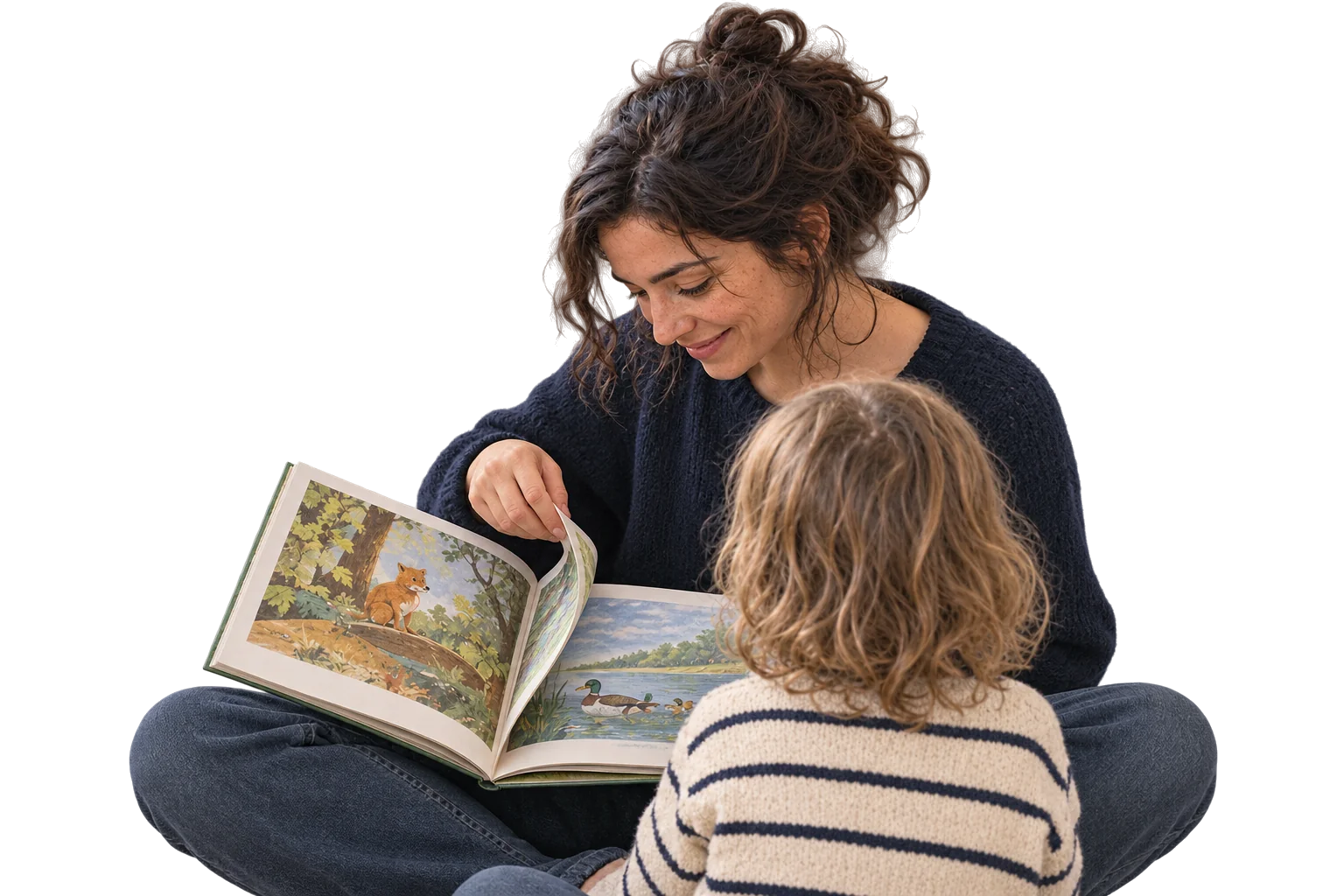 Preschool · 3–5 Don’t let screens hijack play, wonder and time together. Open this age →
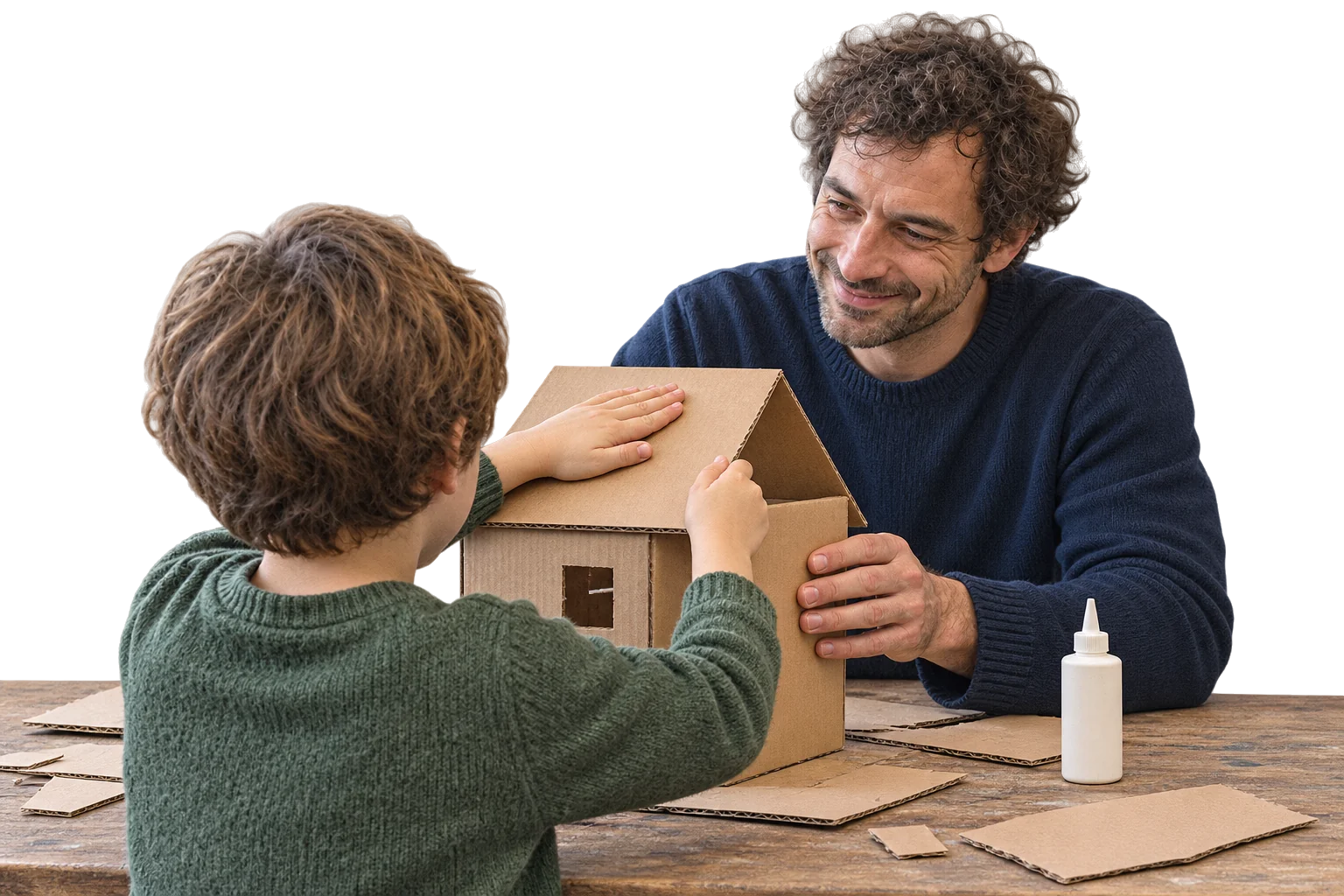 School age · 6–11 Don’t let screens hijack curiosity, creativity and real-world friendships. Open this age →
 Teenagers · 12–17 Help your teenager protect their attention, independence and sense of self. Open this age →
Each age group has its own questionnaire, and each child receives their own set of documents. The current edition does not cover under-threes. See all documents
Digital wellbeing
A little more room for what matters.
Dinner at the table, every screen in another room. A shared story at bedtime, the phone put aside.
The programme starts from what you can actually observe at home, including your own screen habits, and the room left for play, conversation and sleep.
Six weeks
From noticing to trying.
- Understand. Choose your child’s age group and describe what you can actually observe, including your own screen habits.
- Choose. Read the report and selected stories. Recognise a familiar pattern; question what does not fit.
- Try. Bring one small change into real family routines and talk about it together. Change need not happen all at once.
What you receive
See for yourself.
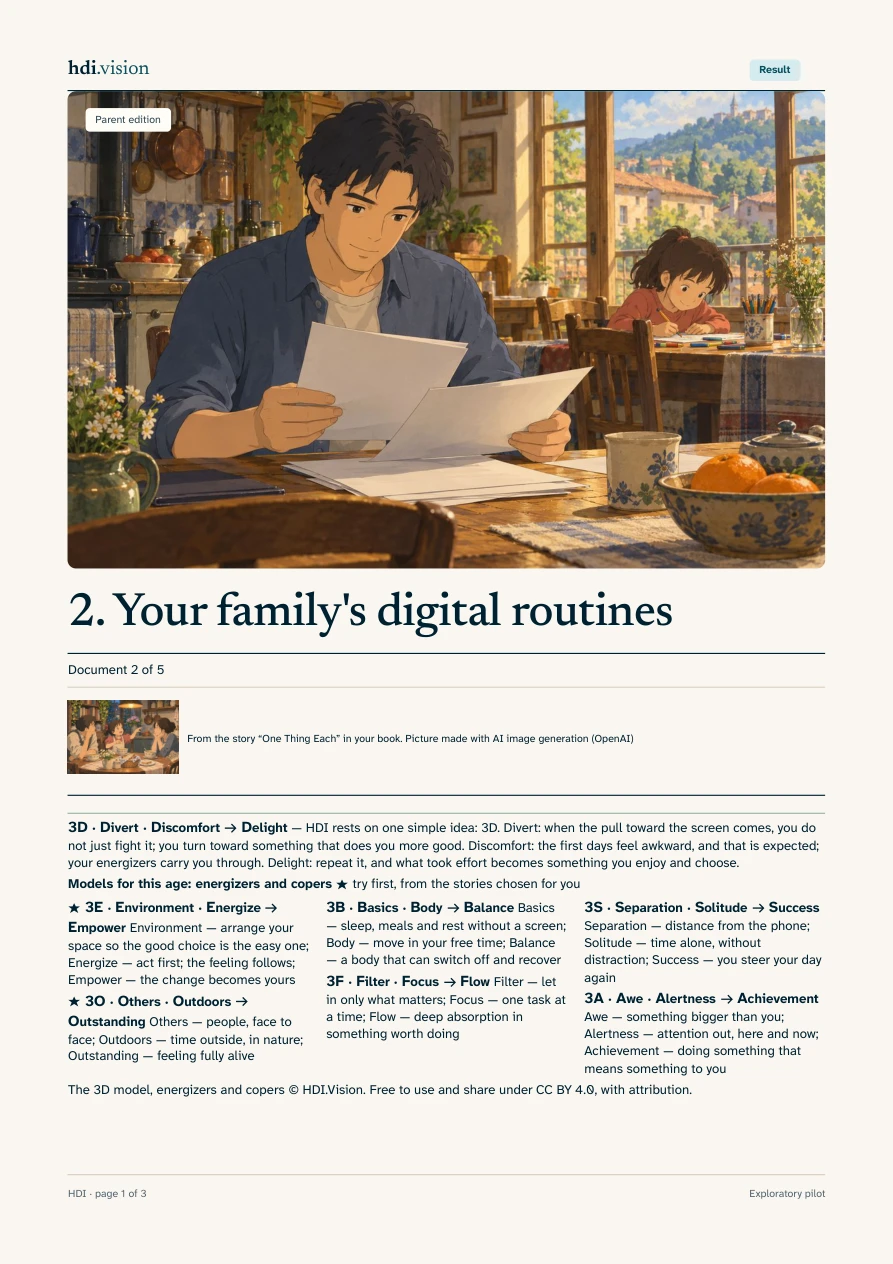 Your family's digital routines
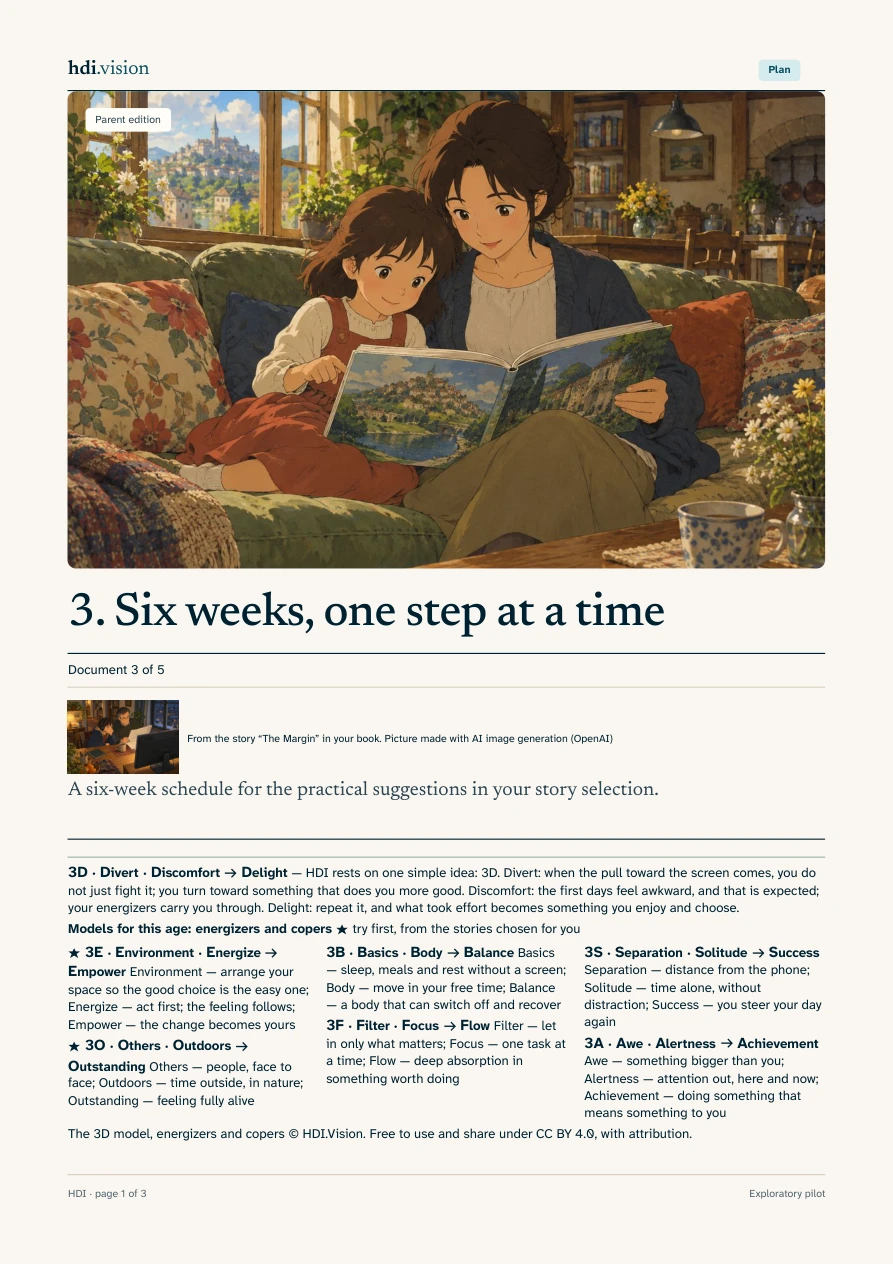 Six weeks, one step at a time
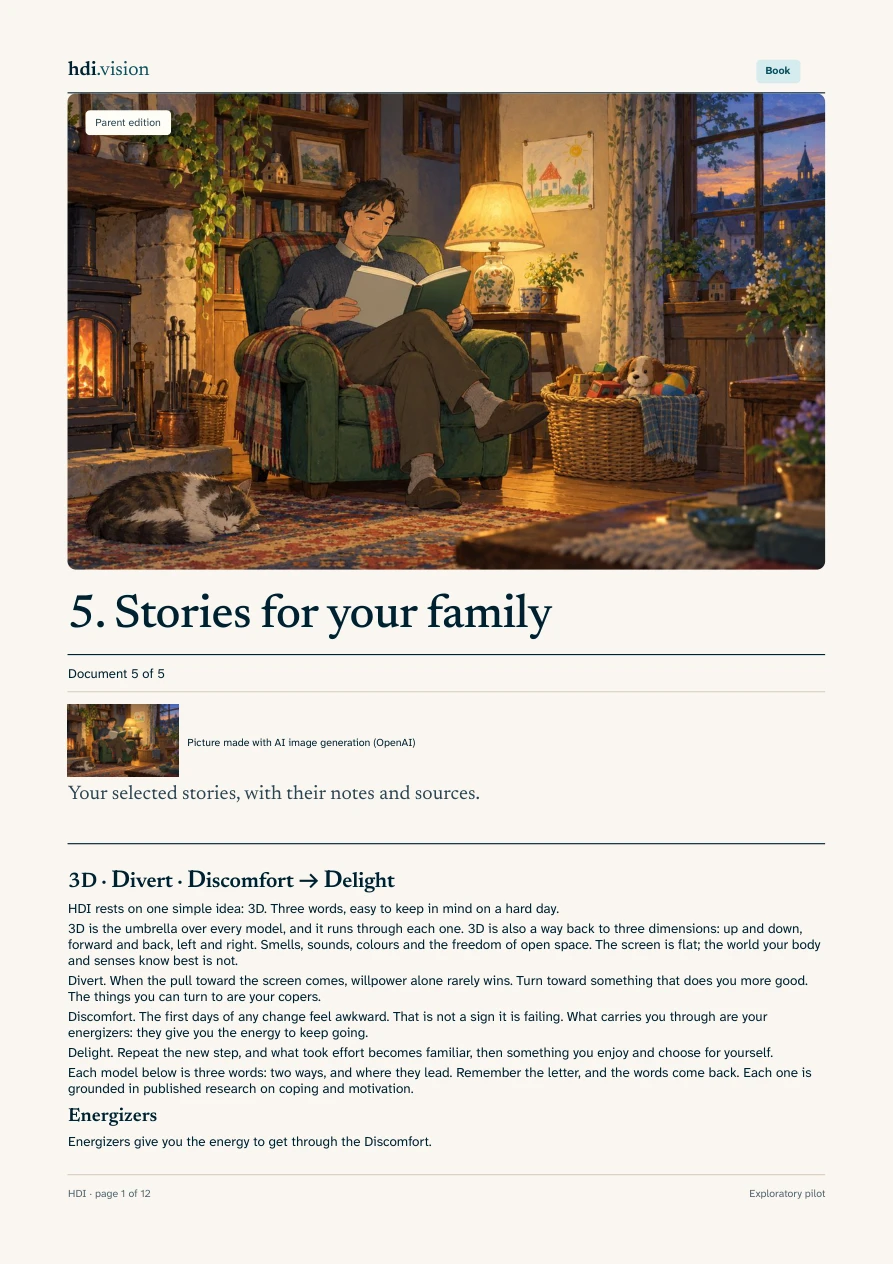 Stories for your family
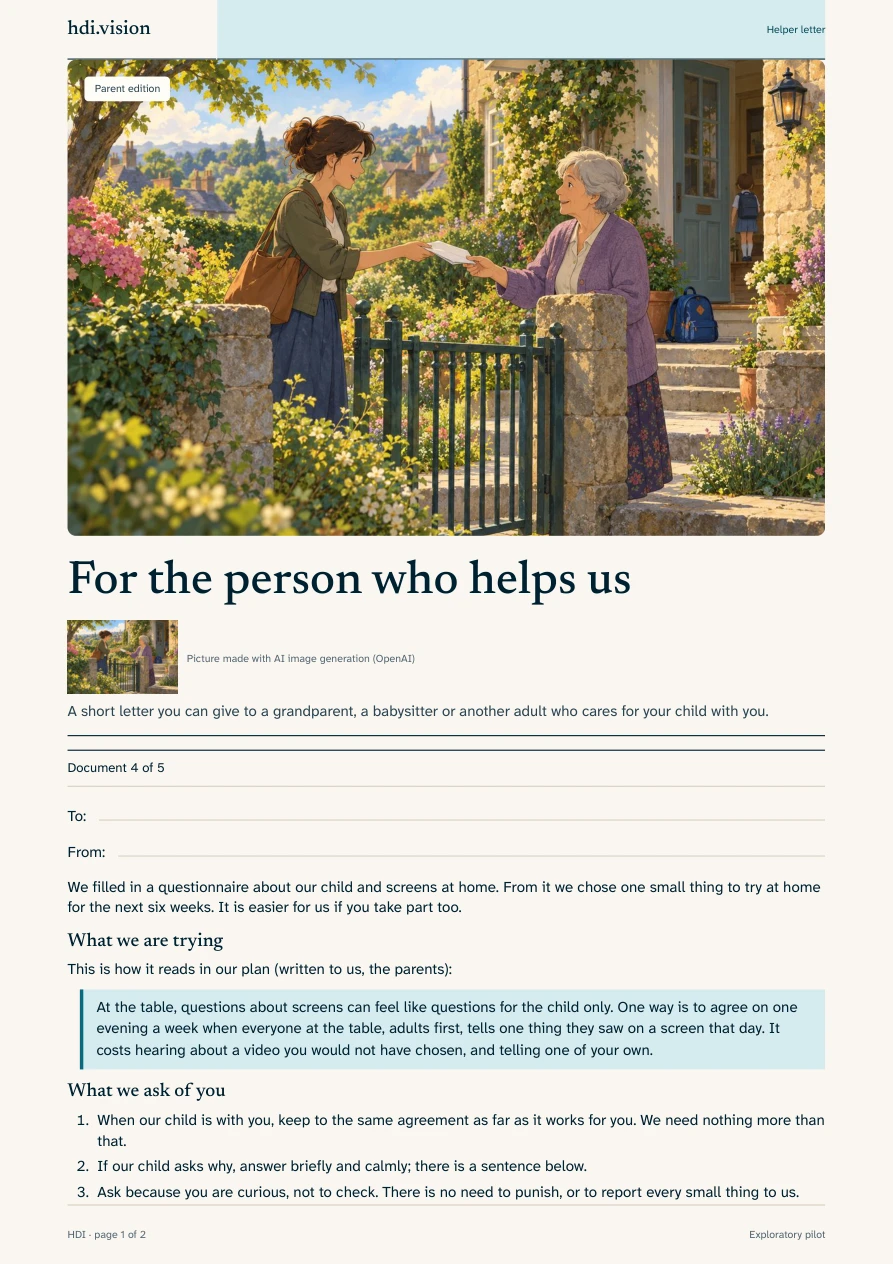 For the person who helps you
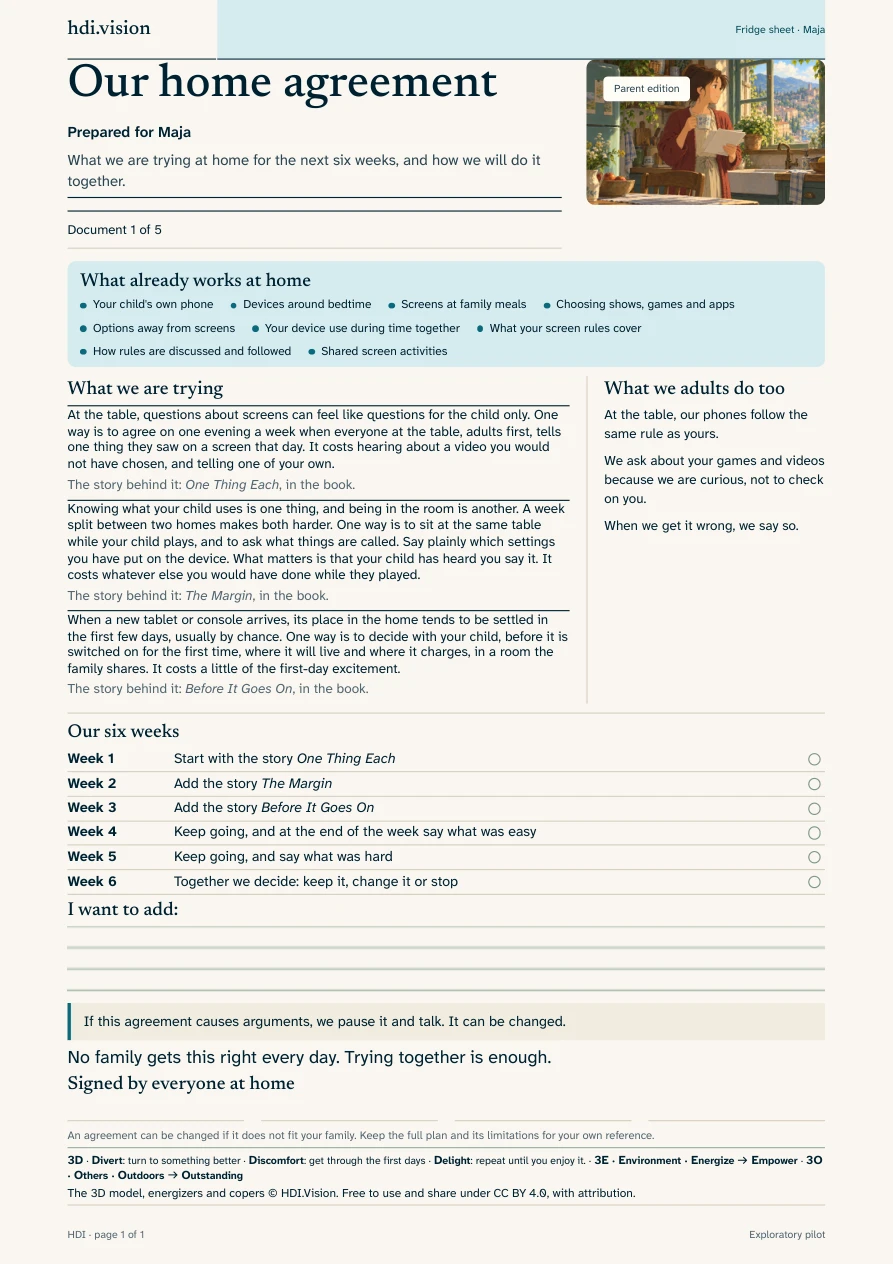 One page for the fridge
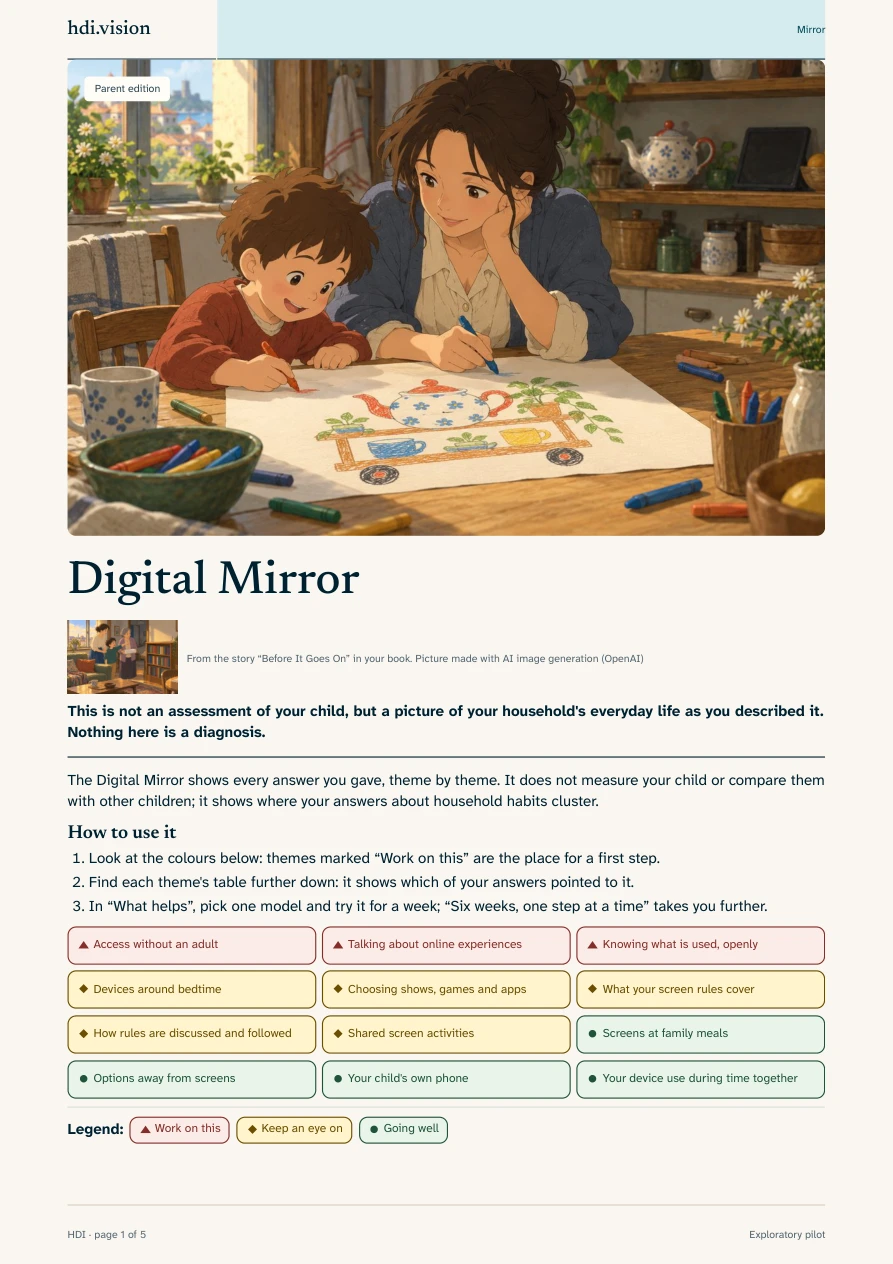 Digital mirror
Example: ages 6–11
Human Digital Intelligence
Who is behind it

Tomislav Krištof
Founder of Human Digital Intelligence · senior lecturer, Algebra Bernays University, Zagreb · doctoral researcher
Human Digital Intelligence was developed with students and employees of Algebra Bernays University in Zagreb, where he teaches as a senior lecturer.
Questions
A few things worth knowing.
Who answers the questions?
The parent or caregiver answers about observable routines and their own behaviour. This is not a questionnaire completed by the child.
Does this diagnose my child?
No. The report is a reflection of a caregiver’s answers. It does not diagnose a child, infer a teenager’s private thoughts or replace professional support.
Free until 1 December 2026; after the beta, from €89 per child (price on 5 Oct 2026: €89). Pricing
Let’s find your starting point.
Look through the samples for your child’s age, then open your account.
Prefer to write first? Tell us what you would like to explore for your family: info@hdi.vision. Please leave out sensitive personal details.
Beta: the family guide is free until 1 December 2026. No card, no app.