Everyday life · Parents · 4 min read
What is screen time taking the place of?
Minutes are a useful starting point. What happens within them, around them and afterwards deserves attention too.
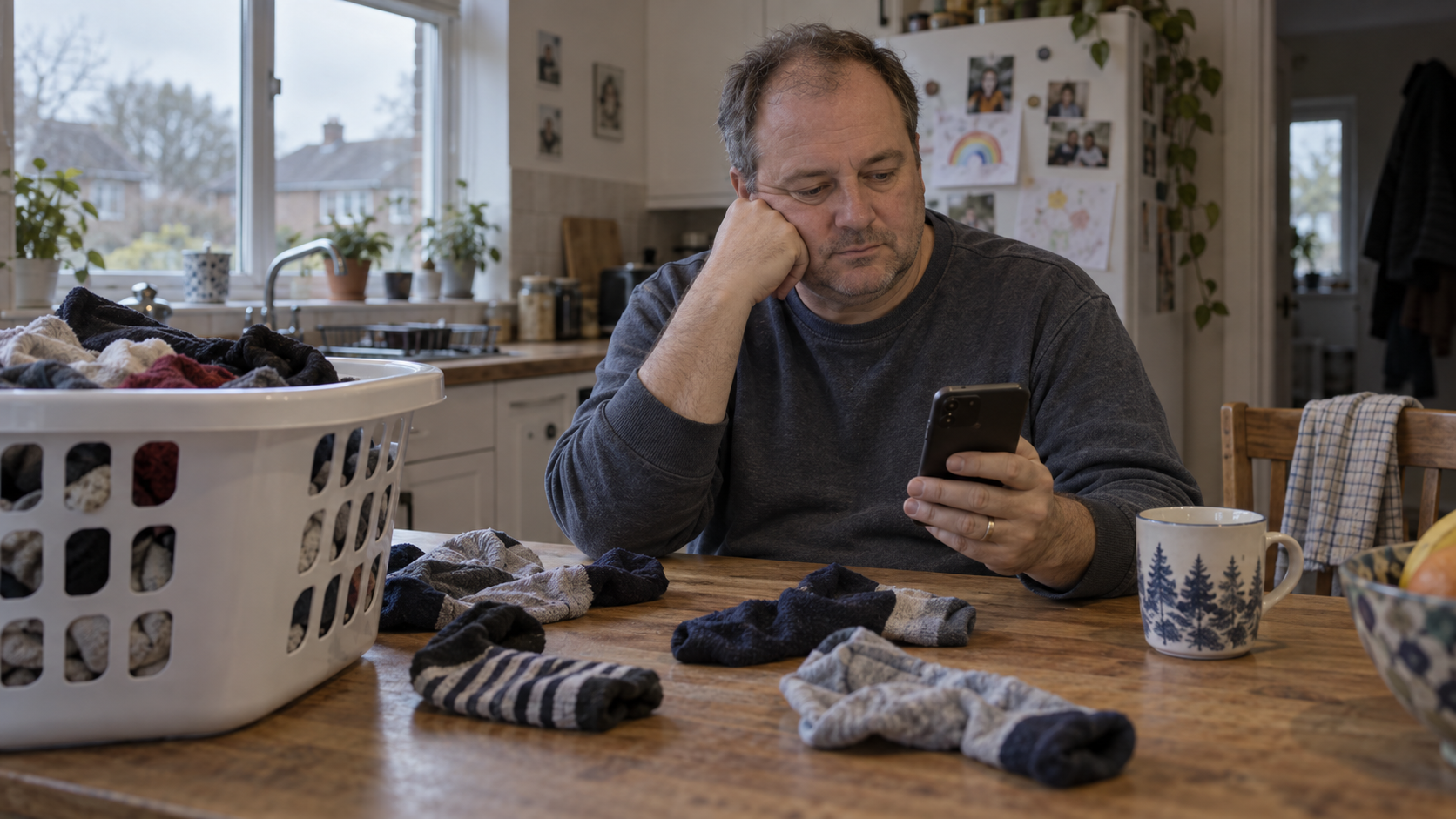
Ask what a particular screen routine makes possible, and what it makes harder. A total alone cannot answer both questions.
Start with a scene you recognise
Imagine two evenings with the same amount of screen time. In one, a child calls a grandparent and then watches a programme with a parent. In the other, videos continue through an intended bedtime. The total is identical; the family has different questions to explore. These are illustrative situations, not evidence that one fixed pattern works for every child.
A number can help you describe a day. It cannot tell you whether a conversation mattered, whether content was frightening, or whether a device was needed for school or accessibility. Before setting a target, describe the routine you actually want to understand. Otherwise you might remove something valuable while leaving the difficult part untouched.
Why guidance looks beyond the clock
The American Academy of Pediatrics’ 5 Cs guidance considers the child, content, calming, what media crowds out and communication. It provides different material for different developmental stages. This is professional guidance for discussing family media use, rather than a trial showing that a particular questionnaire or commercial programme produces a particular result. AAP: 5 Cs guidance
Our practical interpretation is to start with one place in the day: getting ready, arriving home or winding down. Describe what the screen is being used for and what you hoped would happen instead. Include necessary uses. A parent waiting for an urgent work message needs a different arrangement from someone who simply forgot that autoplay was on.
What an experiment can add
A Danish trial offers a more specific finding. In a secondary analysis involving 89 families and 181 children and adolescents aged 4–17, a two-week family reduction in leisure screen use improved parent-reported behavioural difficulties relative to the comparison group. The intervention was intensive: participants were asked to limit leisure screen use to three hours a week and hand over smartphones and tablets. Schmidt-Persson et al., 2024
That result concerns a particular intervention, population and period. Families volunteered, parents knew their allocation, and the outcome reflected parental reports. The study does not establish that the same benefit lasts, that each type of screen activity has the same effect, or that HDI’s programme reproduces the result. Its experimental limit is not a universal household recommendation. Schmidt-Persson et al., 2024
Adult evidence needs its own population label. In a trial of 111 healthy students, Pieh and colleagues tested three weeks of smartphone use limited to two hours a day. Several self-reported mental-health outcomes improved at the end of the intervention. This unblinded student study does not establish the right limit for a working parent or a child, and the groups’ screen-use difference did not persist throughout follow-up. Pieh et al., 2025
A small observation before a big rule
As an optional reflection exercise, write down one difficult episode in ordinary words. What was happening before it? What did the device make easier? What became difficult afterwards? Add what you do not know. You might discover that your concern is a late finish, unexpected content or an argument about an unclear agreement. Those are different starting points.
Choose a goal you can recognise in daily life: a clearer ending to an activity, room for a shared meal, or fewer interruptions during a task. This is a way to organise a conversation, not a validated assessment or a promise of improvement. Keep useful and necessary digital activities in view. The question is which change fits the actual situation, not whether a family can achieve the smallest possible number.
When reading a headline, return to the same questions. Which people were studied? What kind of use changed? What outcome was measured, and for how long? Those details let you judge whether the finding is relevant to the question your family is actually asking.
Sources and scope
- American Academy of Pediatrics — The 5 Cs of Media Use
Professional, age-based discussion guidance. It is not validation of HDI or an effectiveness study of this exercise.
- Screen Media Use and Mental Health of Children and Adolescents: A Secondary Analysis of a Randomized Clinical Trial
JAMA Network Open, 7(7), e2419881. Danish families; two-week intervention; parent-reported outcomes. DOI: 10.1001/jamanetworkopen.2024.19881.
- Smartphone screen time reduction improves mental health: a randomized controlled trial
BMC Medicine, 23, 107. Healthy students; short unblinded intervention; findings cannot be transferred directly to children or HDI.
Sources supplied with this local draft; article claims and source admission remain subject to scientific review. These external works do not validate HDI’s questionnaire or establish the effectiveness of its programme. No external organisation’s endorsement is implied.