Adults seeking everyday digital wellbeing education · 4 min read
Is this screen break helping me recover or helping me postpone?
Separate a useful pause from repeated postponement without treating entertainment or uncomfortable feelings as failures.
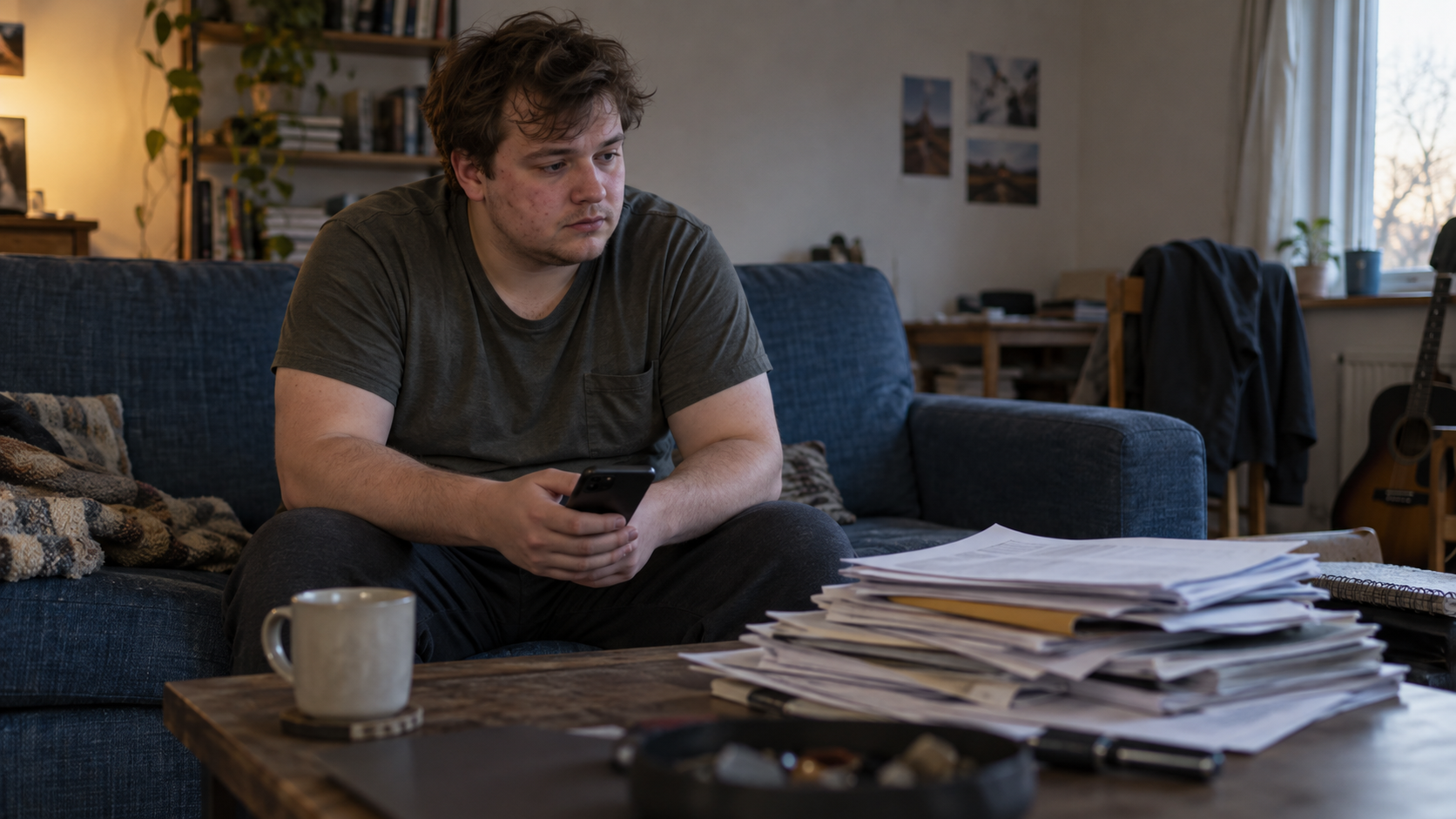
A screen break can offer amusement, contact or relief. It can also postpone an uncomfortable task without making that task easier to face. The distinction is not whether the activity happens on a screen. A more useful question is whether the break gives you what you need and leaves you able to choose what comes next.
The same activity can serve different needs
Imagine opening a comedy clip after a tense conversation. You might laugh, settle a little, and later return to the discussion. On another evening, you might keep switching clips while the unresolved message becomes harder to answer. These are invented examples, not evidence about a particular person.
Neither example tells us that entertainment is bad. Temporary distraction can be an ordinary choice. The practical issue is flexibility: can you use it deliberately, stop when it has served its purpose, and return to something that still needs care?
It helps to name the immediate need in everyday language. You may want quiet, reassurance, company, a change of pace, or time before responding. “I need to fix my brain” is much less useful than “I need ten minutes before I answer that email.”
Different ways of handling feelings are not interchangeable
Gross's laboratory research distinguished changing how an event is interpreted from concealing emotional expression; the strategies had different consequences in a film-viewing experiment. This is evidence that regulation strategies differ, not proof that reframing every difficulty is best or that distress is a thinking error.
Digital distraction also has limits. Across experiments, Tam and Inzlicht found that switching through videos could increase boredom instead of relieving it. Findings were less conclusive in some other materials and samples. The lesson is to check the experience, not assume endless novelty must be refreshing.
Research on brief solitude by Nguyen, Ryan and Deci found a reduction in highly activated feelings, with choice mattering to some benefits. Chosen quiet is different from unwanted isolation. No one needs to force themselves into prolonged silence to satisfy an ideal.
Ask what would fit this particular moment
If you need connection, another anonymous feed may not provide the same thing as a message to someone who knows you. If you need a break from demands, a competitive game might be enjoyable or might feel like another demand. If you need information, repeated checking may add little after the practical question has been answered.
You can make a small menu before the difficult moment arrives. Include options you actually like: one episode, music, a brief conversation, a quiet drink, or sitting somewhere different. Screen-based choices can stay on the list. An alternative that feels punitive is unlikely to be a welcoming place to turn.
Then choose an endpoint that matches the activity: after one song, after the episode, or before an agreed call. This is a personal experiment, not a clinically tested dose. The point is to make the next choice visible.
Return with a smaller next step
A break need not solve the whole problem to be worthwhile. When you return, identify the smallest relevant action: open the document, write a draft without sending it, ask for clarification, or decide when a conversation can happen.
Sometimes the honest next step is more rest or asking for support. Sometimes the task is genuinely unreasonable. Emotional regulation should not become a way of adapting silently to mistreatment, impossible workload or unsafe circumstances.
Notice whether your chosen activity leaves you steadier, more connected, pleasantly entertained, or still looking for something else. Those observations help you adjust the choice without attaching a moral label to the feeling.
Keep the claim proportionate
These studies do not diagnose avoidance from a person's screen time. They do not show that a short routine treats a mental health condition. Repeated distress or difficulty functioning deserves attention beyond a digital-habit experiment.
For ordinary daily decisions, try one useful question: “What do I need from this break, and how will I know when it has helped?” It makes room for pleasure and recovery while keeping the rest of your day in view.
Sources and scope
- Gross (1998), Antecedent- and response-focused emotion regulation
- Tam and Inzlicht (2024), Fast-forward to boredom
- Nguyen, Ryan and Deci (2018), Solitude as an approach to affective self-regulation
Sources supplied with this local draft; article claims and source admission remain subject to scientific review. These external works do not validate HDI’s questionnaire or establish the effectiveness of its programme. No external organisation’s endorsement is implied.