Adults seeking everyday digital wellbeing education · 4 min read
Protecting sleep starts before the last scroll
Understand how screen timing, bedtime and recovery differ, and make one realistic change around your evening.
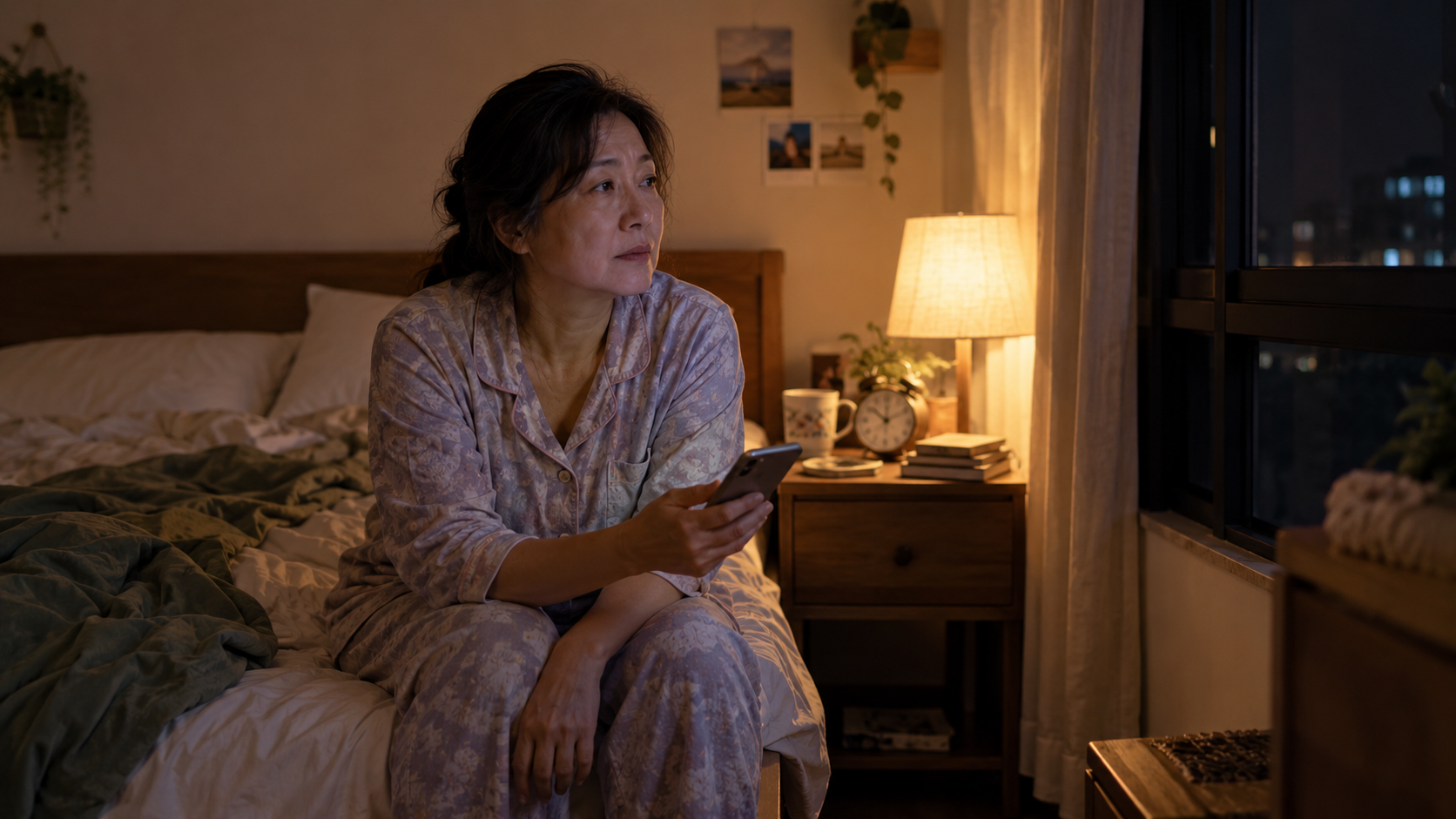
If screen use keeps pushing bedtime later, protecting the opportunity to sleep is a sensible starting point. You do not need to prove that every tired morning was caused by a device. You need to identify whether your evening leaves enough room for sleep and whether one adjustable part of the routine is repeatedly taking that room away.
Rest and sleep are different questions
Imagine someone finally sitting down after work, cooking and caring for a relative. Watching a series feels like the first unclaimed part of the day. The next episode begins, bedtime slips, and the morning alarm remains fixed. This is a fictional situation, not study evidence.
The evening may contain enjoyable rest while still leaving too little time for sleep. A plan that removes the only enjoyable part of the day without addressing workload is unlikely to feel fair. The practical challenge is to preserve some chosen leisure while deciding where it ends.
Sleep also differs from feeling relaxed. You can feel calm and still need sleep, or have enough time in bed but struggle to sleep. Those experiences need different responses.
What the evidence says about screens
A controlled study by Chang and colleagues found altered circadian timing and reduced next-morning alertness after sustained evening use of a light-emitting e-reader compared with print. It demonstrates a possible light-related mechanism under specified conditions. It does not show that every short phone interaction has the same effect.
The AASM and Sleep Research Society consensus recommends at least seven hours regularly for healthy adults, with its evidence assessment focused on ages 18–60. This is general guidance, not a promise that one duration fits everyone, and it is not a target for children. Individual needs and health circumstances vary.
NHLBI guidance emphasizes sufficient sleep opportunity, a regular schedule and quieter time before bed. That provides a broader starting point than choosing a display colour setting alone. Changing light settings does not create time if the activity still continues past bedtime.
Find the part of the evening you can change
Begin with your actual morning obligations. Then look backward at the evening: work, care, travel, eating, washing and leisure. A bedtime plan should acknowledge those demands. If the schedule contains too little space overall, an app setting cannot solve the entire problem.
Choose one practical adjustment. You might decide before starting how much of a series to watch, disable autoplay where available, or finish stimulating work messages earlier when your role allows it. Put a quieter alternative within reach if you want one.
Keep necessary functions available. A phone may serve as an alarm, communication aid, medical support tool or link to someone who depends on you. The useful boundary may concern one activity or notification channel rather than removing the device completely.
Ask what kind of recovery you need
Sonnentag and Fritz's recovery research distinguished experiences including psychological detachment, relaxation, mastery and control over leisure. That research developed measures; it did not identify one universally restorative hobby.
The distinction still offers helpful questions. Do you need to stop thinking about work? Enjoy something you chose? Learn a small skill? Sit quietly? An evening can meet more than one need, and an engaging digital activity can sometimes be part of it.
If the only available plan is “work all day, stop everything enjoyable, sleep,” look for a better arrangement. Reducing a late distraction should make room for a livable routine, not turn bedtime into punishment.
Review without making sleep another performance test
Try the adjustment on ordinary evenings and notice whether bedtime became easier to keep. A brief morning note about sleepiness may help, but you do not need a perfect tracking system. Several changing factors can influence a night, so a few observations cannot establish causation.
Shift work, pain, caring responsibilities and ongoing sleep difficulties may require a different approach. Persistent difficulty sleeping or marked daytime sleepiness deserves professional attention; a screen routine is not a complete assessment.
The useful aim is a realistic opportunity for sleep, supported by an evening you can actually live with. Begin with the part you can influence and treat the rest as context to address, not evidence of personal failure.
Sources and scope
- Chang et al. (2015), Evening use of light-emitting eReaders
- Watson et al. (2015), Recommended amount of sleep for a healthy adult
- NHLBI, Healthy Sleep Habits
- Sonnentag and Fritz (2007), The Recovery Experience Questionnaire
Sources supplied with this local draft; article claims and source admission remain subject to scientific review. These external works do not validate HDI’s questionnaire or establish the effectiveness of its programme. No external organisation’s endorsement is implied.