Adults seeking everyday digital wellbeing education · 4 min read
Nourishment, Nurture and Natural: remembering the body in a digital day
Explore HDI's bodily coper through realistic care for sleep, movement and comfort, without promises of a nervous-system reset.
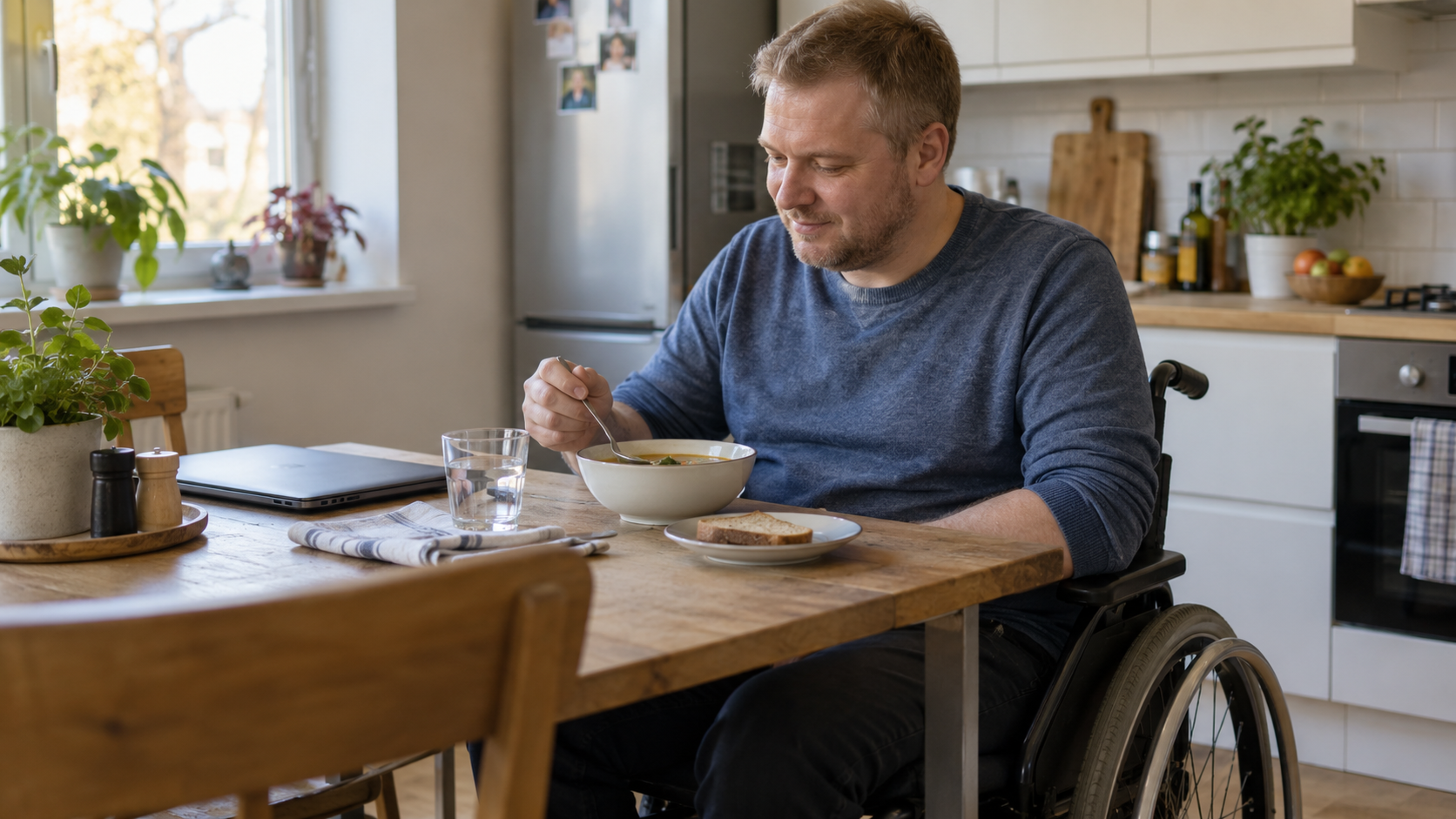
HDI uses Nourishment, Nurture and Natural as the name of a coper concerned with the body's needs during a digital day. In the framework, Nourishment and Nurture describe care for bodily needs and signals; Natural names a hoped-for more settled bodily state. These are educational labels, not a medical assessment or a proven sequence for regulating the nervous system.
A practical way to begin is to ask what your body has been waiting for while your attention was elsewhere.
Notice the need without making it a character judgment
Imagine someone absorbed in work who realizes that lunch is still in the bag, their position has become uncomfortable, and they have been postponing a break. This invented example illustrates missed opportunities for care. It does not demonstrate that screens caused a physiological disorder.
The next step can be ordinary: eat when appropriate, change position comfortably, use the bathroom, or take a break you are entitled to. You do not need a complicated routine before responding to an obvious need.
Bodies and circumstances differ. Disability, pain, illness, medication, shift work and caring responsibilities can change what is possible or helpful. A useful practice must fit those circumstances rather than prescribe an idealized body or schedule.
What general evidence can support
NHLBI guidance encourages protecting sleep opportunity and supports practical routines, including adaptations for shift workers. That supports attending to sleep as part of daily care. It does not establish a special HDI recovery mechanism.
The World Health Organization's physical-activity guidance emphasizes that some activity is better than none and that activity takes many forms. It does not prescribe the same movement to every person. An accessible, appropriate option matters more than copying somebody else's routine.
Sonnentag and Fritz's research distinguished experiences involved in unwinding from work. This helps keep bodily needs and recovery in view, but measurement research does not prove that a particular break will restore you.
None of these sources validates the complete Nourishment-to-Natural framework. The support belongs to narrower ideas about sleep, activity and recovery.
Nourishment: make basic care possible
Think beyond the word food. In this educational framework, the concern is the bodily support a demanding day requires. Which need has no reliable place in your schedule? Which is repeatedly displaced by another message or task?
Choose one obstacle that can actually change. Perhaps meal time needs protecting, a water container needs to be within reach, or the workday needs an agreed stopping point. These are organizational examples, not dietary prescriptions or treatments.
If basic needs are consistently incompatible with your workload, the problem may require a discussion about staffing, coverage or expectations. Individual reminders cannot compensate for being denied the time or access necessary for care.
Nurture: respond to signals proportionately
Notice discomfort, tension, hunger or sleepiness without treating every sensation as evidence of danger. Ask what a simple, appropriate response would be. Change a position, pause an activity, adjust the environment or seek advice when a concern persists.
Avoid making universal claims about breathing, cold exposure, supplements or a “reset.” Such claims require their own evidence and individual safety considerations. This article does not recommend them.
Comfort can also depend on sensory conditions: sound, light, seating or the pace of demands. A person using digital tools for accessibility may need those tools more carefully arranged, not removed.
Natural is an intention, not a state you must perform
Within HDI, Natural describes the hoped-for outcome of feeling more bodily settled. It is not a purity category, a biomarker or a guarantee that caring for yourself will make every stressor disappear.
You might meet a need and still feel tired. You might take an appropriate break without becoming calm. Those observations do not cancel the value of eating, resting or moving in a way that suits you.
Choose one realistic care opportunity and check whether it became easier to access. If symptoms persist or interfere with daily life, seek appropriate assessment rather than explaining them through a digital framework. The coper should help you remember the body you live in, with its actual needs and limits, rather than create another standard to fall short of.
Sources and scope
- NHLBI, Healthy Sleep Habits
- World Health Organization, Physical activity
- Sonnentag and Fritz (2007), The Recovery Experience Questionnaire
Sources supplied with this local draft; article claims and source admission remain subject to scientific review. These external works do not validate HDI’s questionnaire or establish the effectiveness of its programme. No external organisation’s endorsement is implied.