Kids and screen time · Ages 6–11
“Five more minutes.” Every single evening?
A six-week guide to agree on screen time at home, for parents of children aged 6–11. A 15-minute questionnaire shapes your report, practical strategies, stories and the plan. Only you answer, not your child.
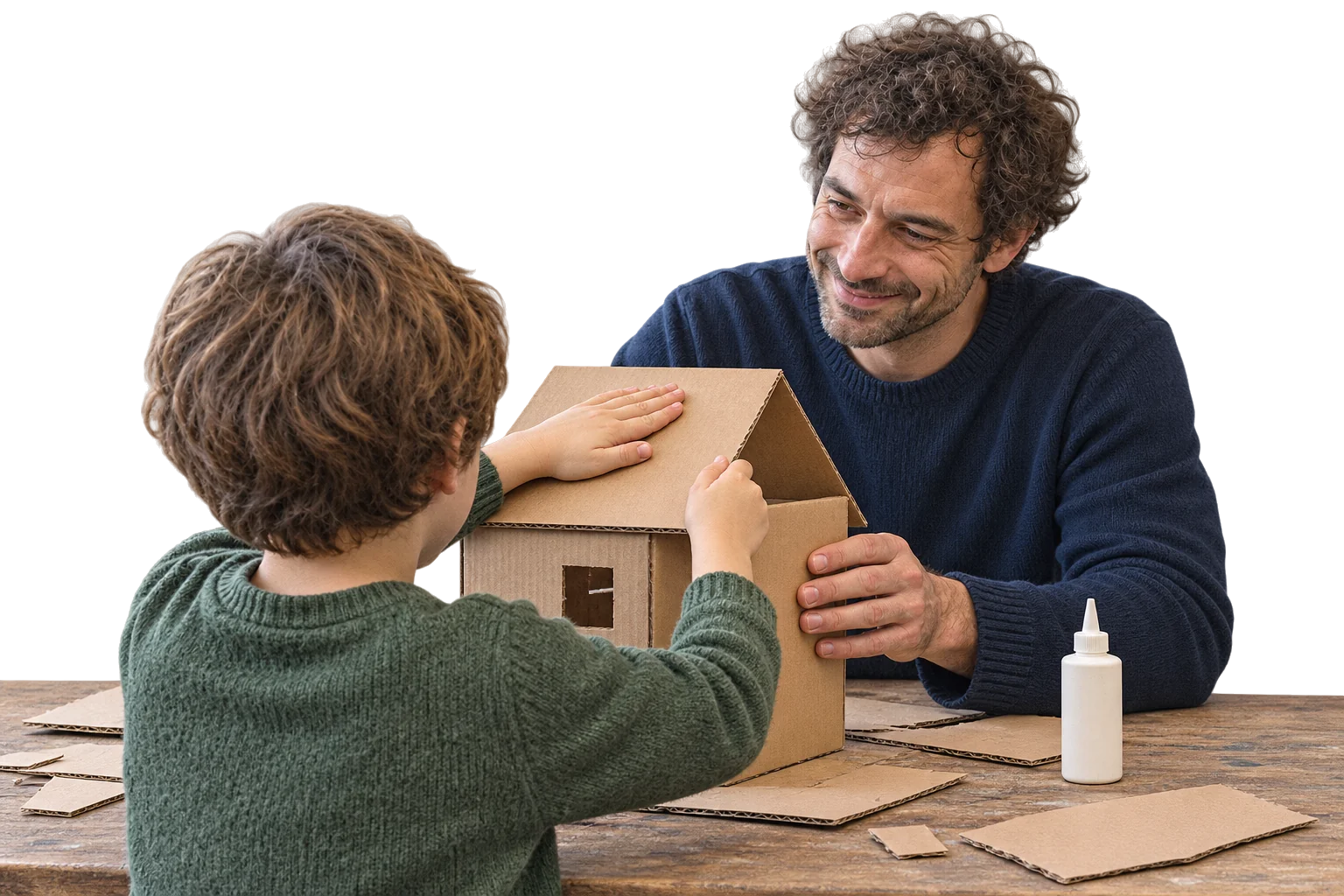
Illustrative scene · AI-generated
Beta: the guide is free until 19 November 2026. No card, no app.
For parents
What can screens crowd out at this age?
Protect what growing up needs. Screens can take the place of making things, learning through trial and error, playing with friends and the satisfaction of doing something independently. Ready-made entertainment can fill the space where a child’s own idea might have emerged.
Screen routines
What you might notice
What to look at
Device access, shared time, content, household agreements and the example adults set.
One small step
Choose one household agreement together, explain its purpose and return to it after trying it in everyday life.
What you receive
See for yourself.
Six documents that work together, for your child’s stage.
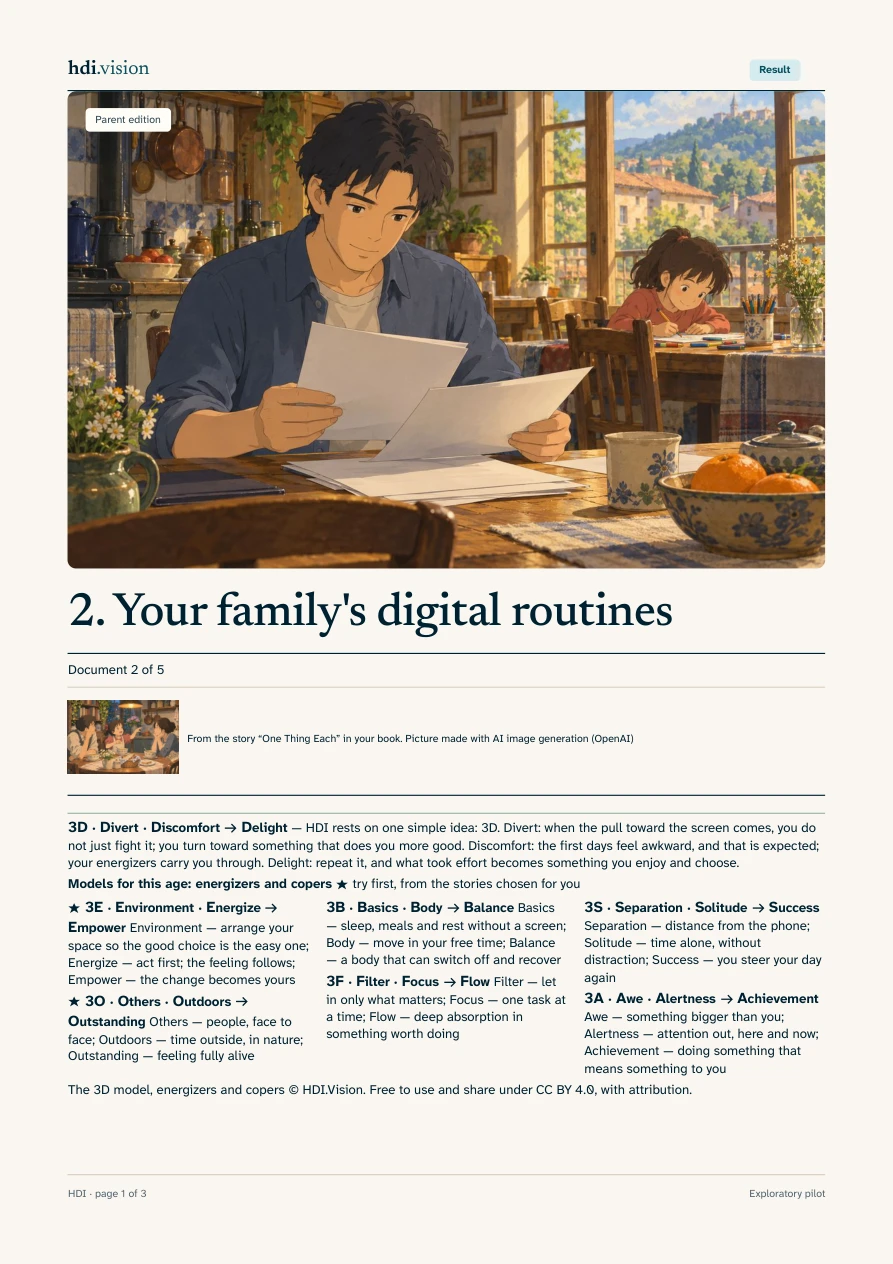 Your family's digital routines A reading of the household routines you describe, with relevant context and notes. Open PDF ↗
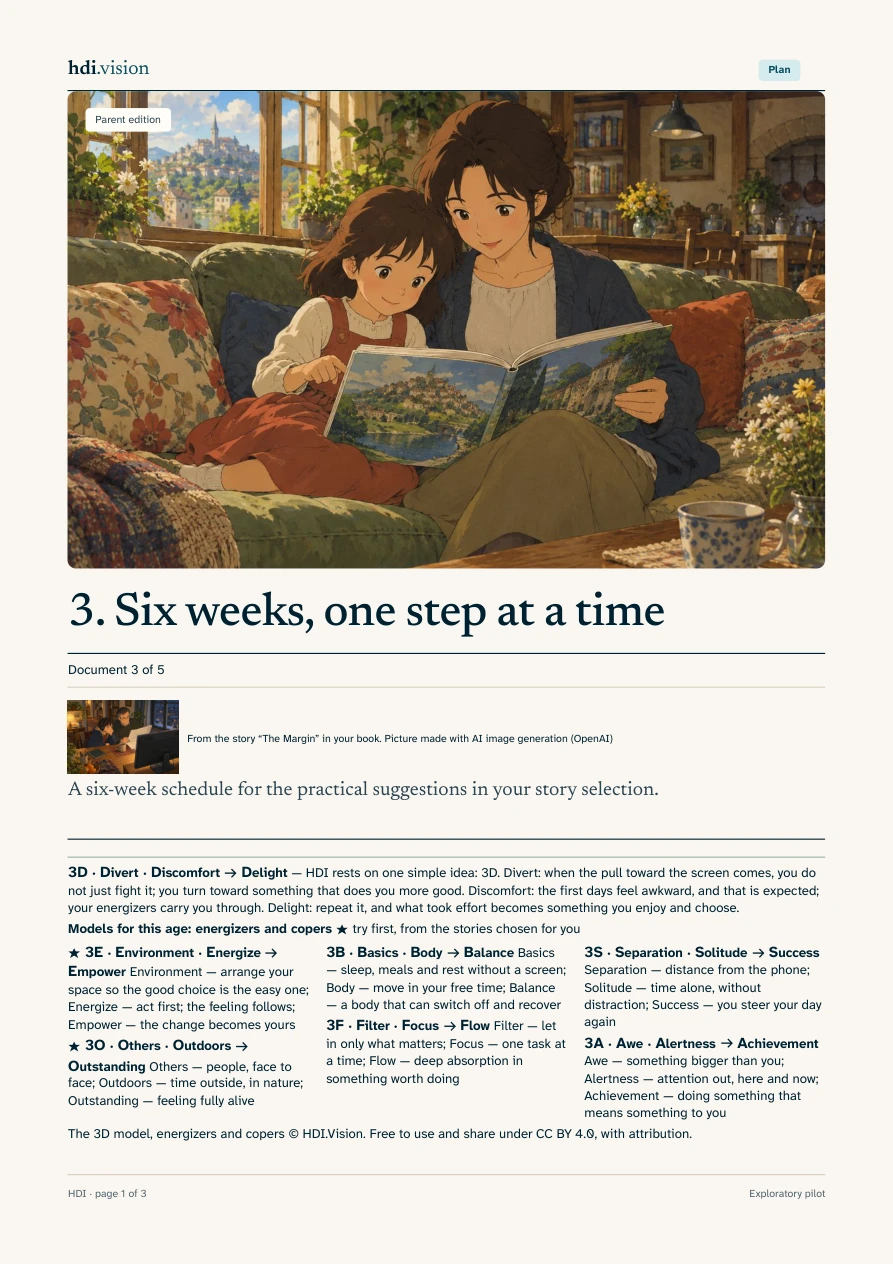 Six weeks, one step at a time A practical schedule for the selected suggestions, with room to choose what fits. Open PDF ↗
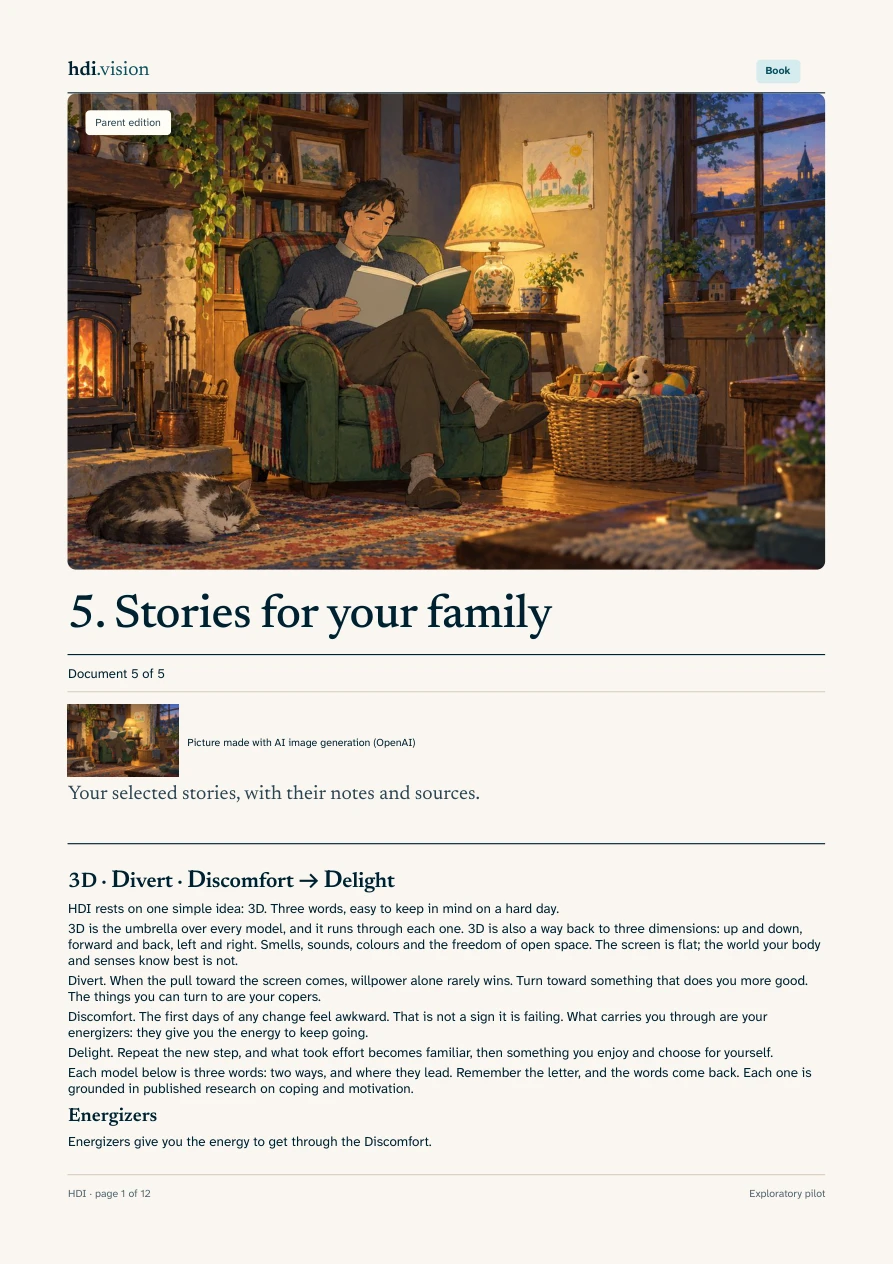 Stories for your family Up to three selected stories for parents, with notes and sources. Open PDF ↗
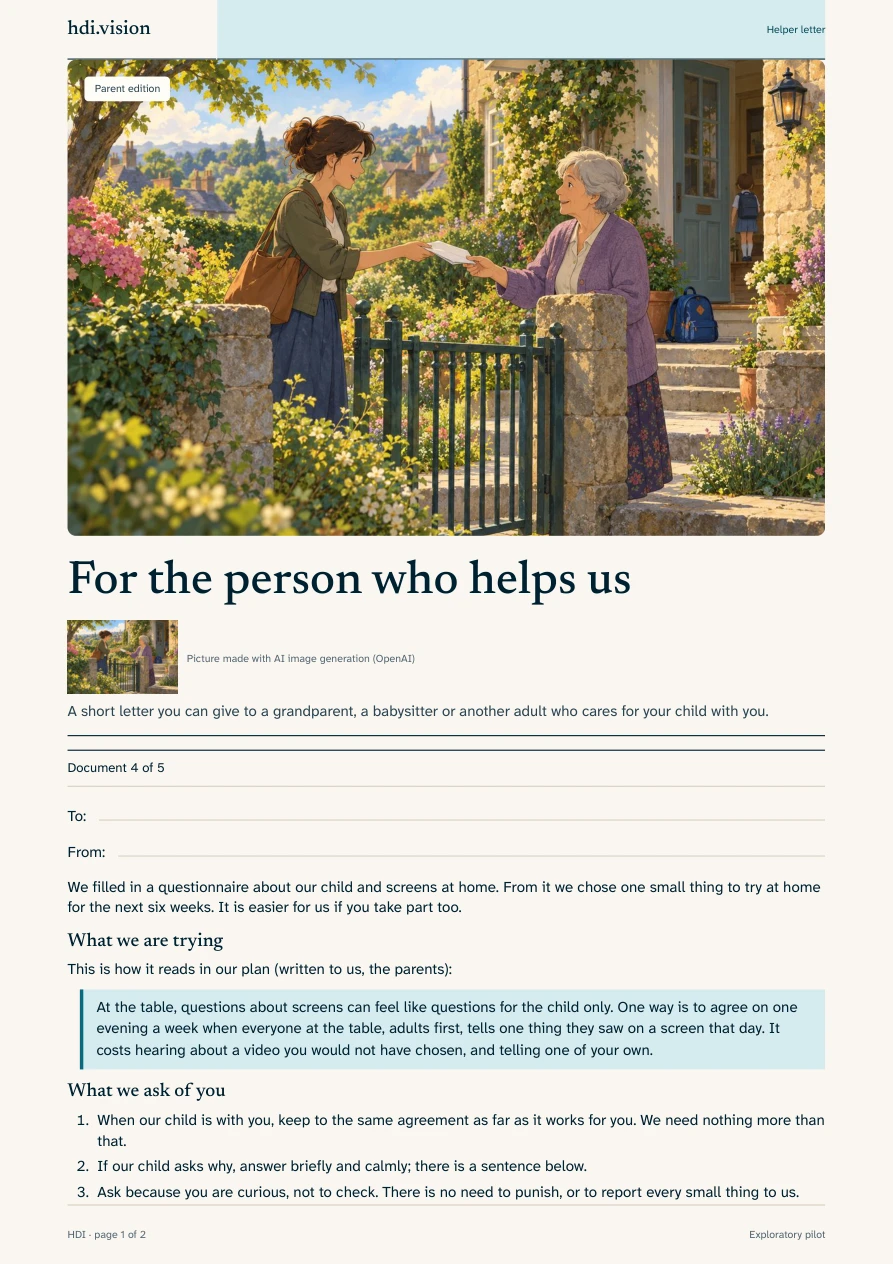 For the person who helps you A chosen practice to discuss with another adult who helps care for your child. Open PDF ↗
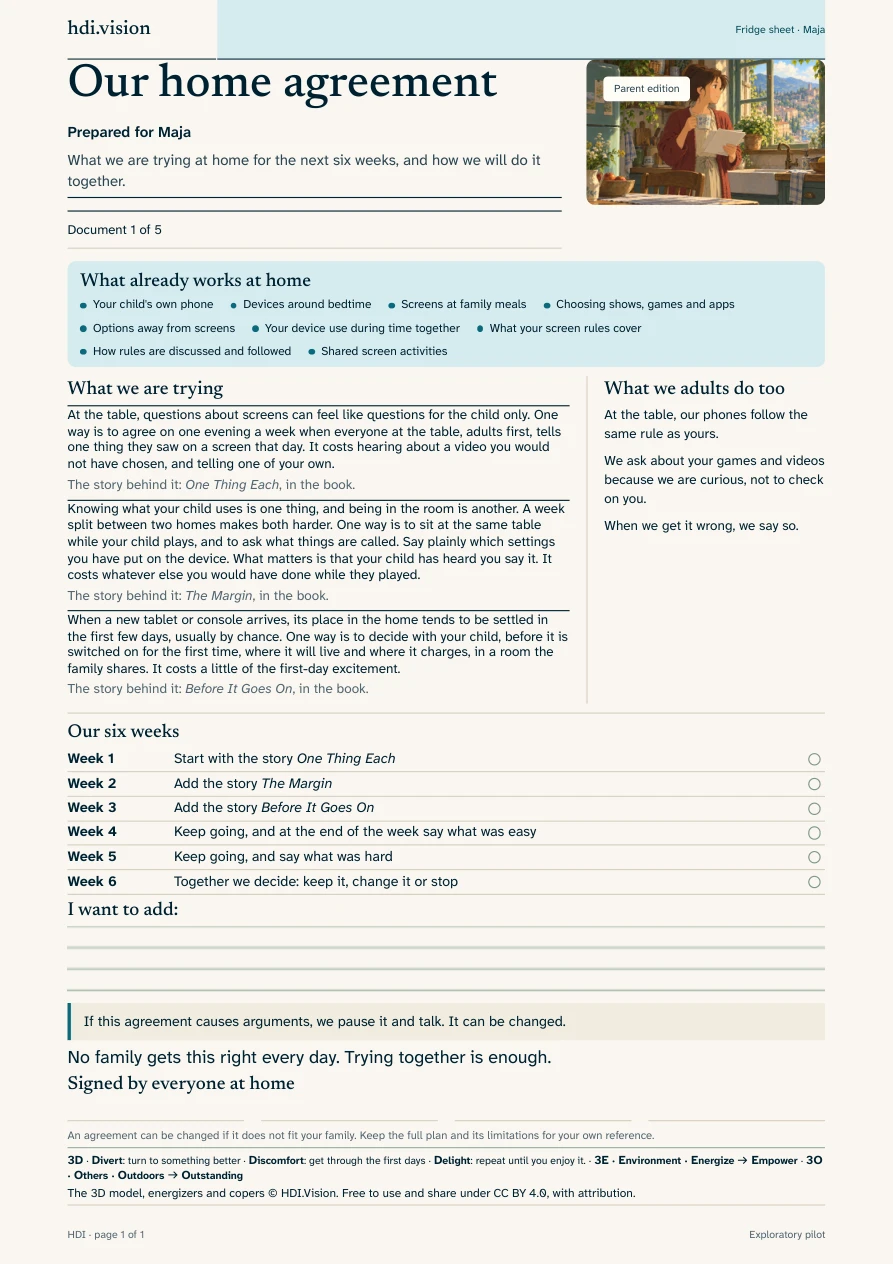 One page for the fridge One practice from the plan, with space to agree when and how to try it. Open PDF ↗
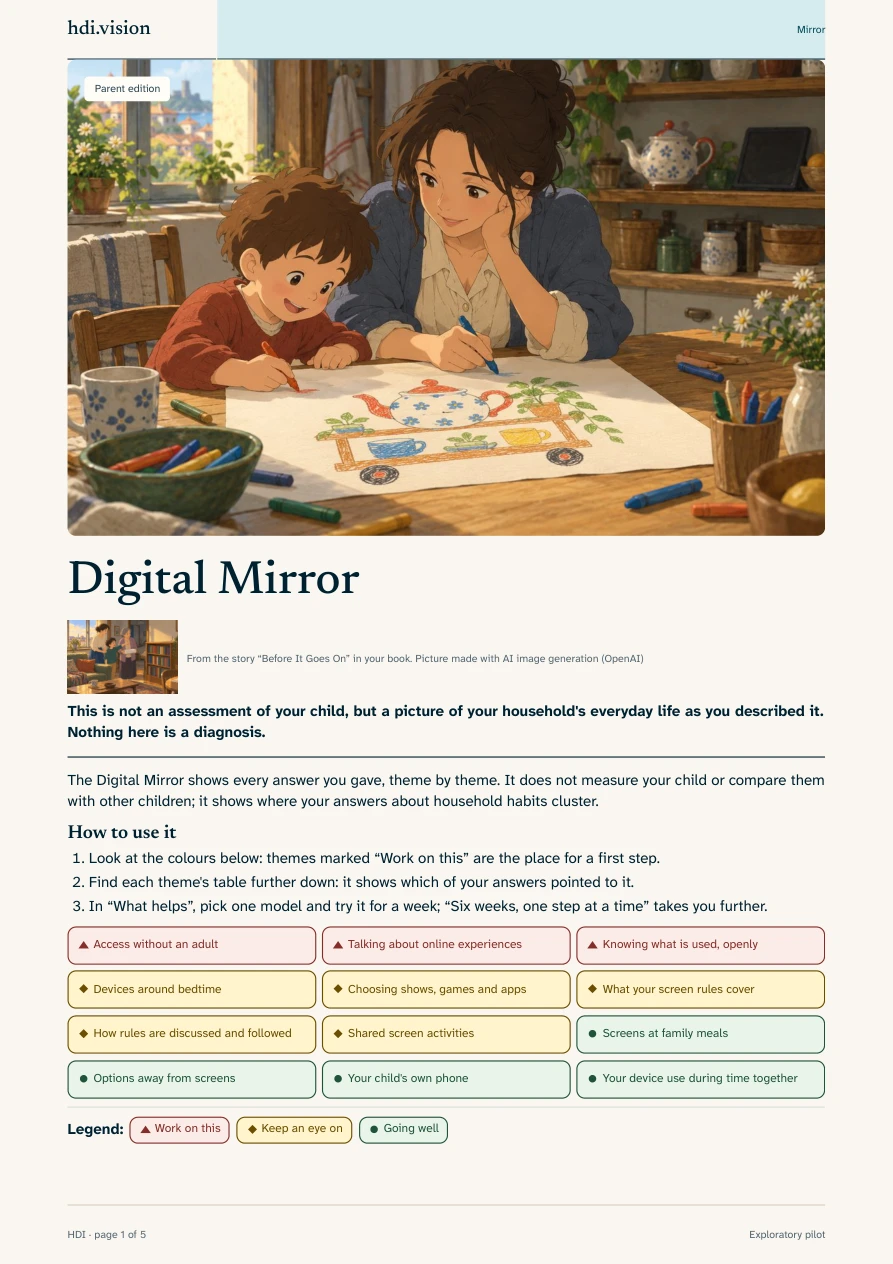 Digital mirror Every answer you gave, theme by theme, with colours showing where your answers gather. Open PDF ↗
Fictional example: Marko, parent of a 9-year-old. Devices are easy to access. Conversations about games and advertising are infrequent. All six documents use this fictional parent’s questionnaire answers. The helper and fridge examples include a practice selected from the same plan. These examples do not assess a real child or promise an outcome.
Research
Research, kept in perspective.
2 weeks
A short family experiment.
In a randomised trial involving 89 families and 181 children and adolescents, a strict two-week reduction in leisure screen use improved parent-reported difficulties. The short follow-up limits what it tells us about lasting effects; this was not a trial of HDI.
Beyond minutes. AAP, 2026: guidance on children’s digital environments ↗ · More research
Start with your family.
One child €89 · family up to three children €149, after the beta (prices on 5 Oct 2026: €89 and €149).
Beta: the guide is free until 19 November 2026. No card, no app.