Teens and phones · Ages 12–17
Their door is closed. Their phone is always on.
A six-week guide for parents of teenagers aged 12–17, built on conversation, not control. A 15-minute questionnaire about what you see at home and your own habits shapes your report, strategies and stories. Only you answer, not your teenager.
Illustrative scene · AI-generated
Beta: the guide is free until 19 November 2026. No card, no app.

For parents
What can screens crowd out at this age?
Protect what growing up needs. Screens can take over attention, time for sleep and friendships, and space to discover personal interests. Other people’s opinions and constant comparison can crowd out the questions: What do I want? What matters to me?
Screen routines
What you might notice
What to look at
Overnight devices, shared meals, open conversations, agreed boundaries and your own screen use.
One small step
Agree on one boundary together, including what the adults will do. Revisit it as independence and circumstances change.
What you receive
See for yourself.
Six documents that work together, for your child’s stage.
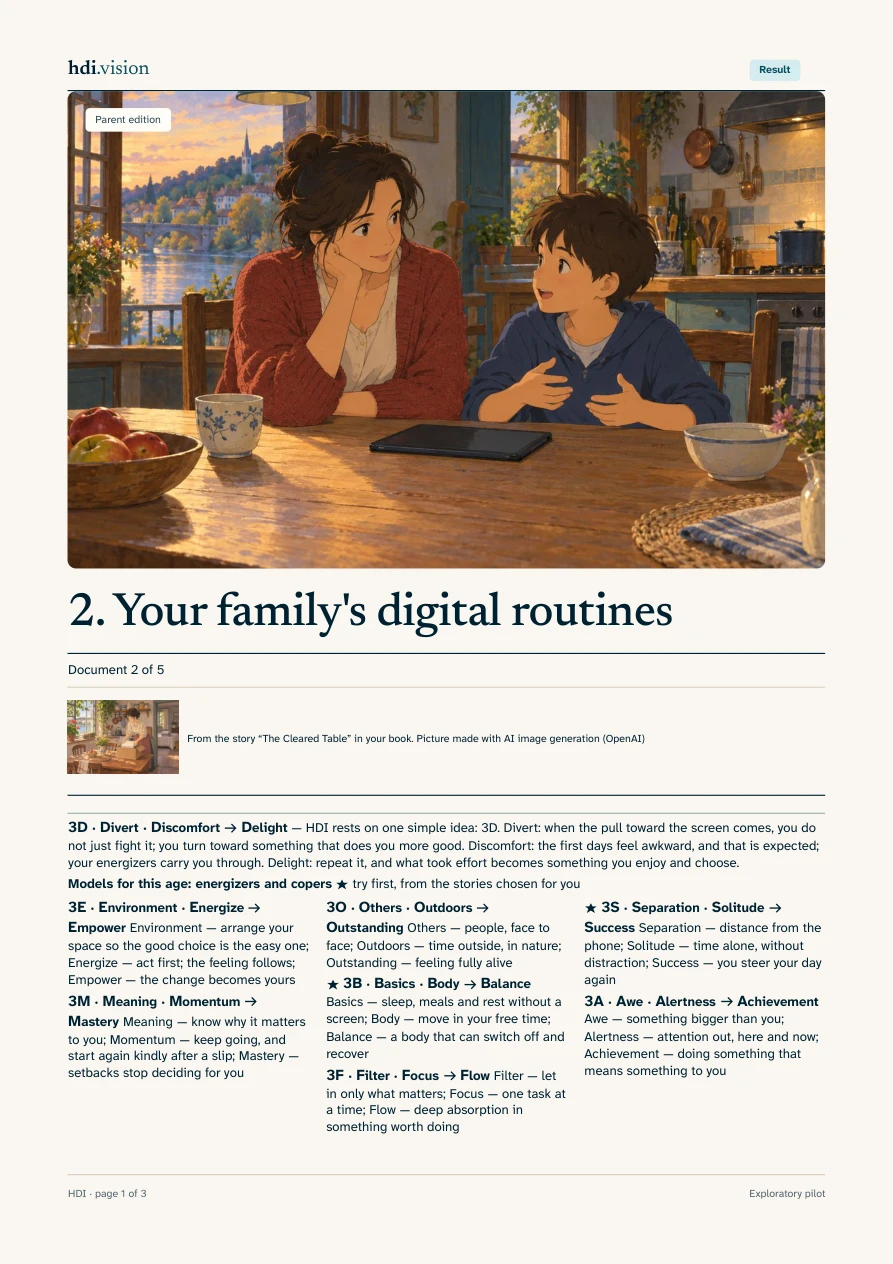 Your family's digital routines A reading of the household routines you describe, with relevant context and notes. Open PDF ↗
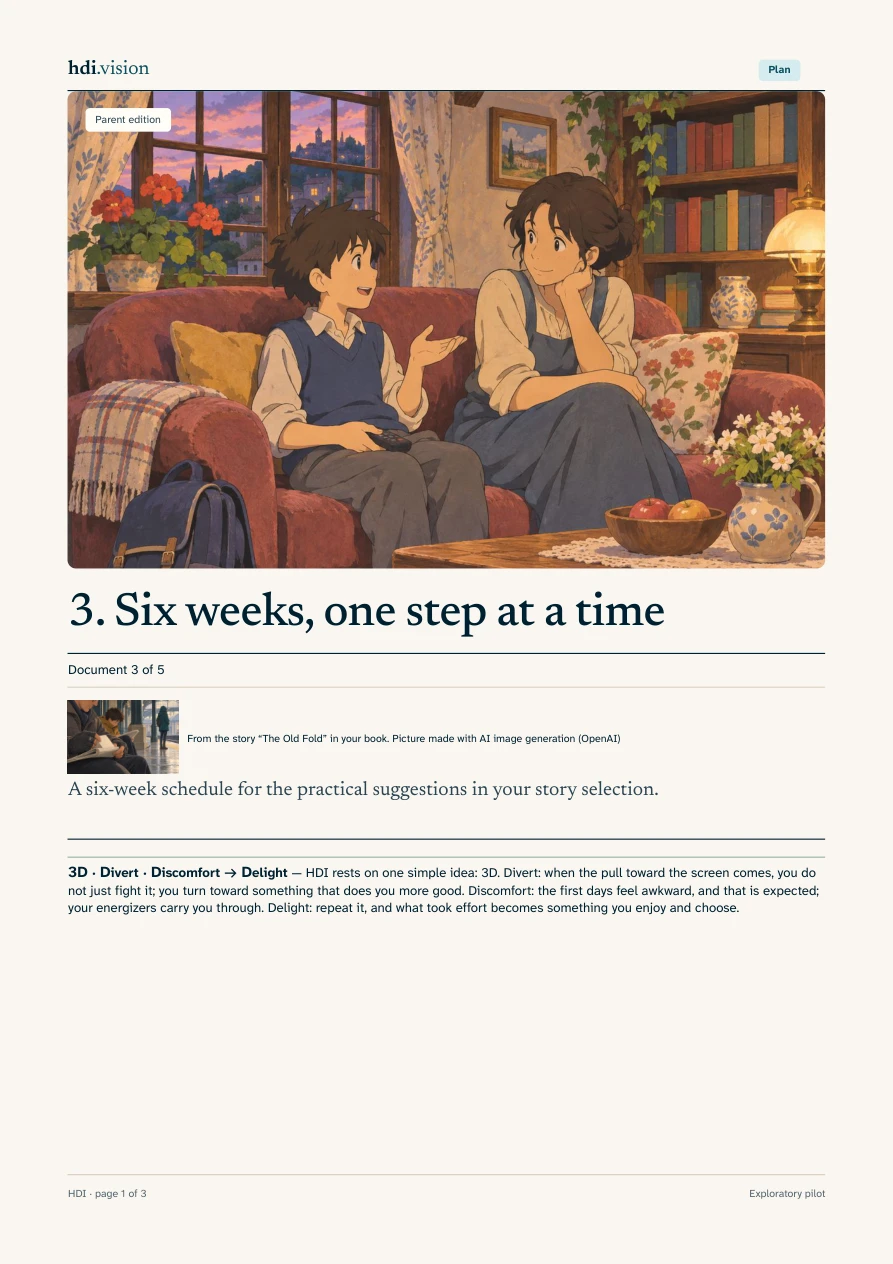 Six weeks, one step at a time A practical schedule for the selected suggestions, with room to choose what fits. Open PDF ↗
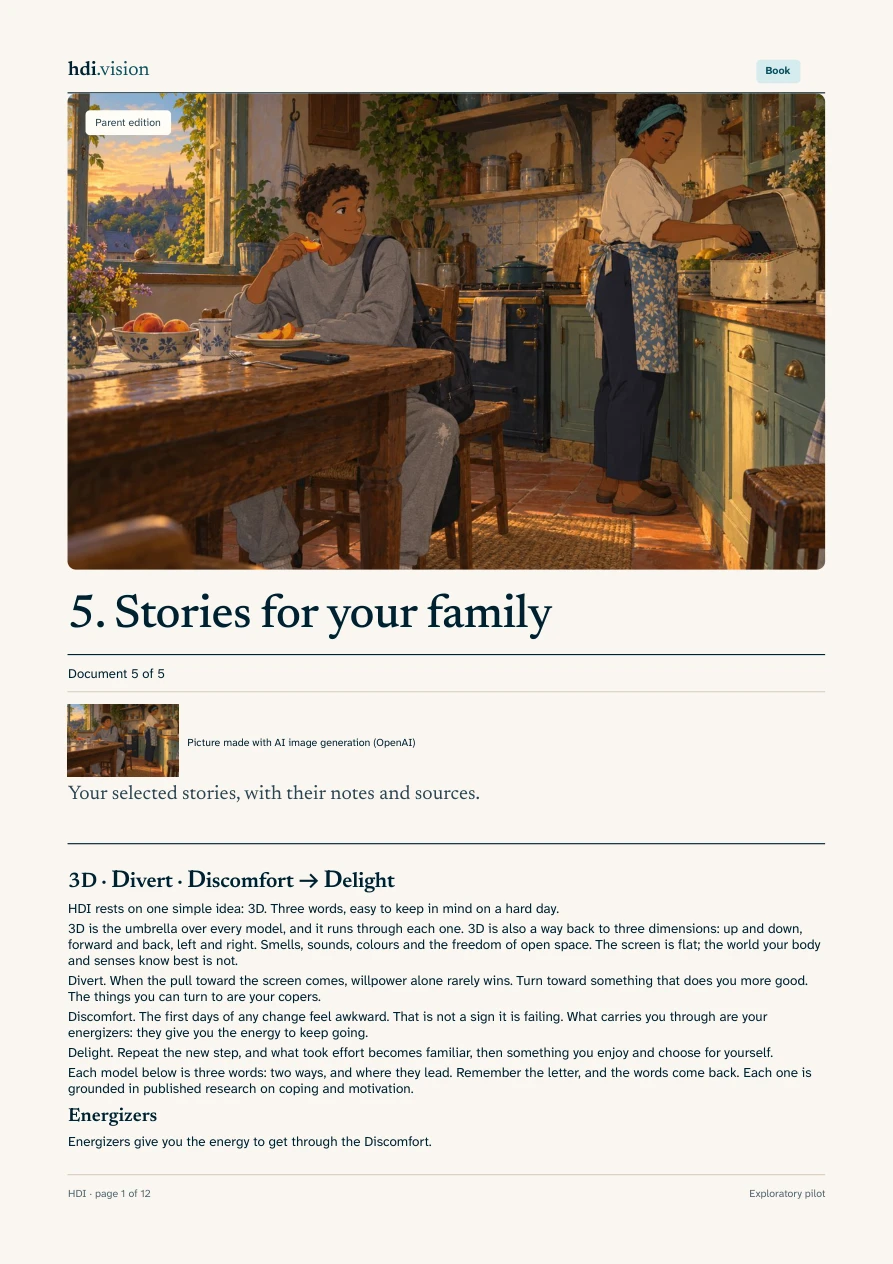 Stories for your family Up to three selected stories for parents, with notes and sources. Open PDF ↗
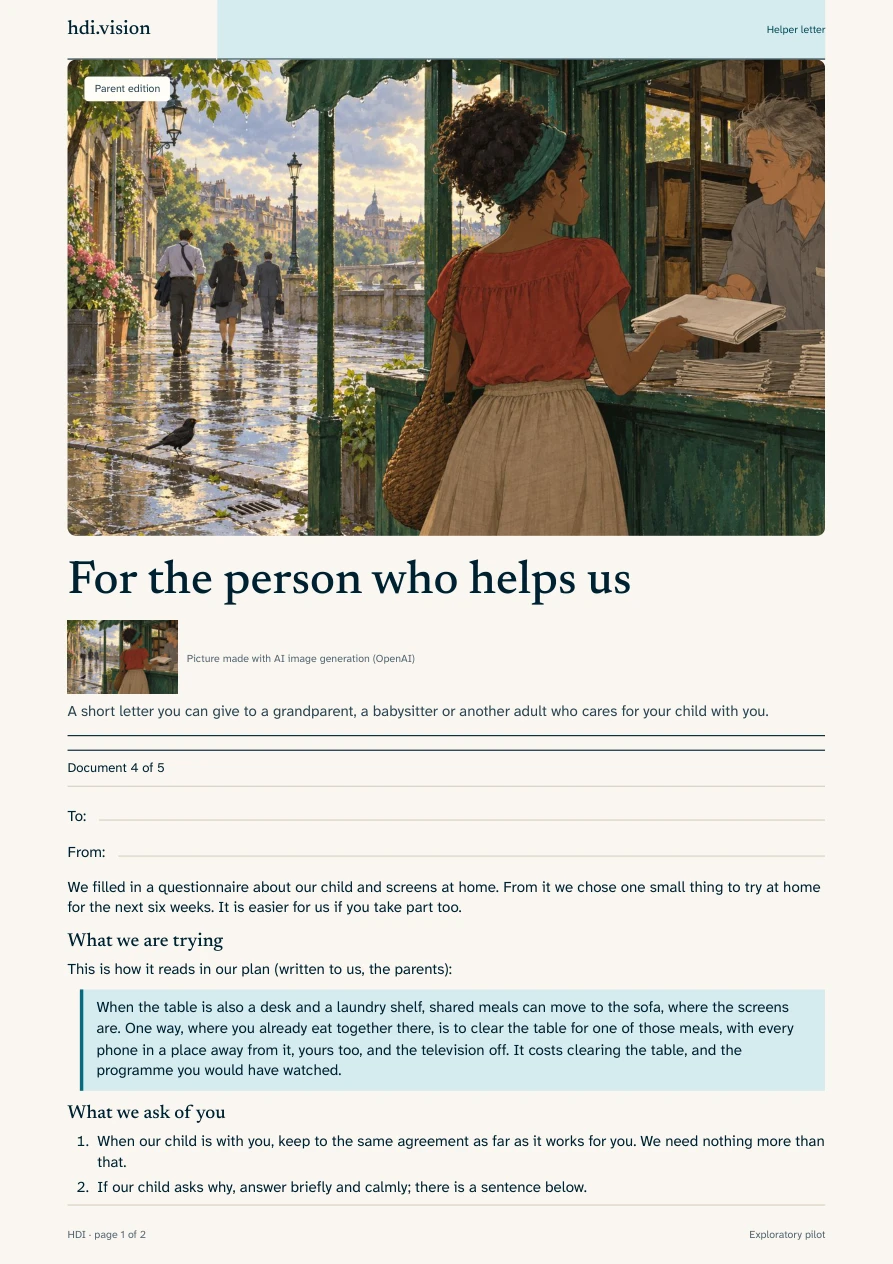 For the person who helps you A chosen practice to discuss with another adult who helps care for your child. Open PDF ↗
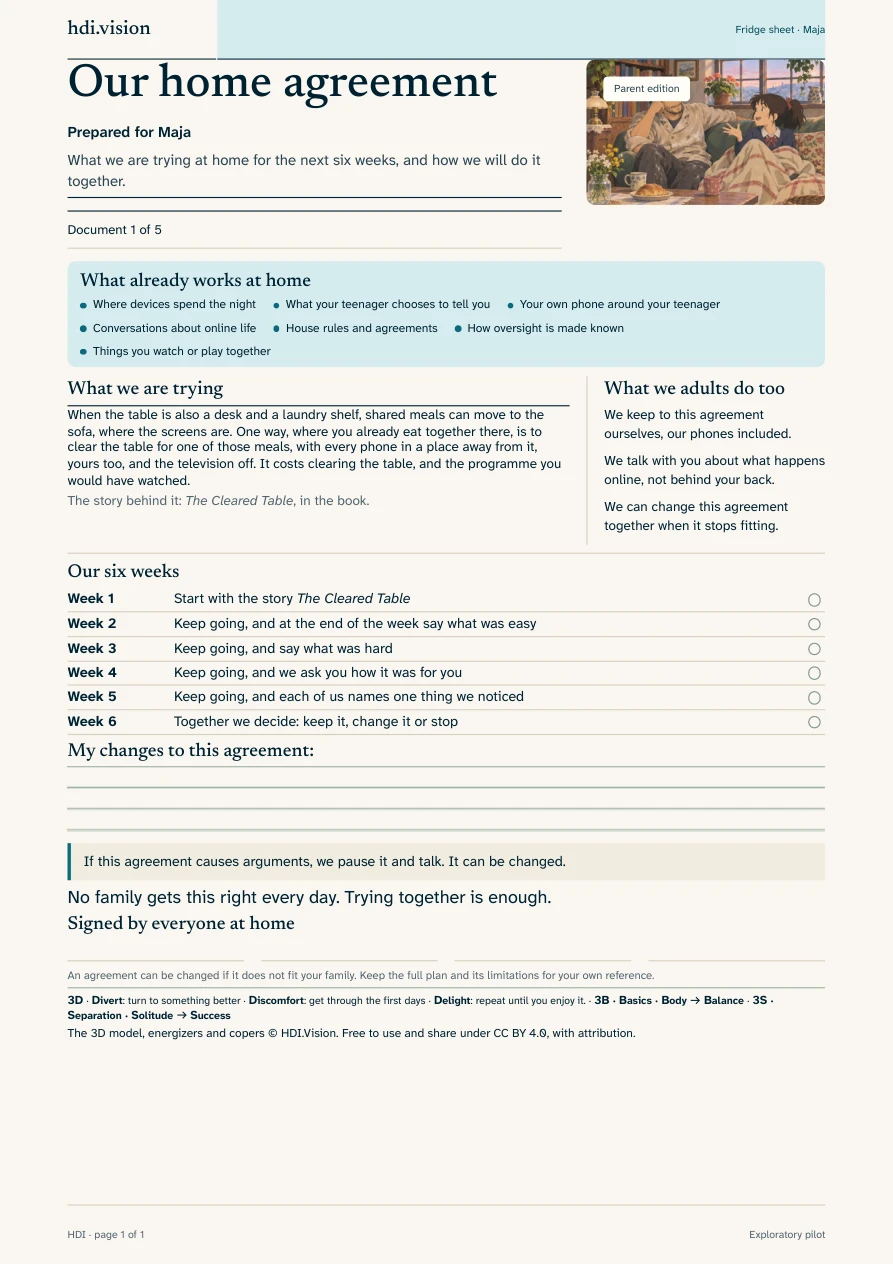 One page for the fridge One practice from the plan, with space to agree when and how to try it. Open PDF ↗
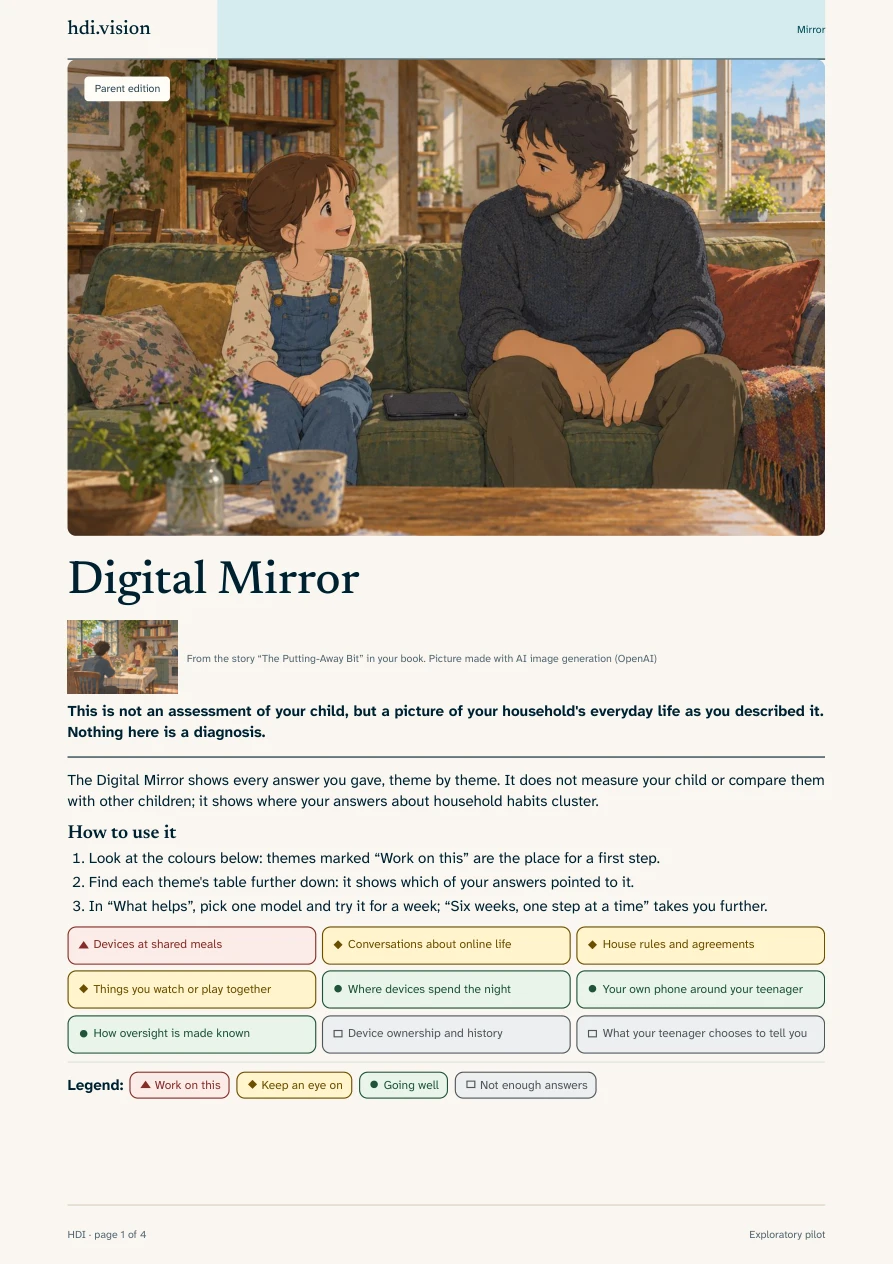 Digital mirror Every answer you gave, theme by theme, with colours showing where your answers gather. Open PDF ↗
Fictional example: Damir, parent of a 15-year-old. A phone is often used during shared meals. Overnight charging is already outside the bedroom. All six documents use this fictional parent’s questionnaire answers. The helper and fridge examples include a practice selected from the same plan. These examples do not assess a real child or promise an outcome.
Research
Research, kept in perspective.
20 studies
Devices at bedtime and sleep.
A meta-analysis of 125,198 children and young people aged 6–19 linked bedtime portable-device use or access with poorer sleep outcomes. The included studies were cross-sectional, so the findings cannot establish cause and effect.
Beyond minutes. AAP, 2026: guidance on children’s digital environments ↗ · More research
Start with your family.
One child €89 · family up to three children €149, after the beta (prices on 5 Oct 2026: €89 and €149).
Beta: the guide is free until 19 November 2026. No card, no app.