Adults using the term bedrotting for extended time in bed · 4 min read
Bedrotting: is staying in bed giving you the rest you need?
Look at what a day in bed provides and what it leaves unmet, without shaming rest or treating a trend as a diagnosis.
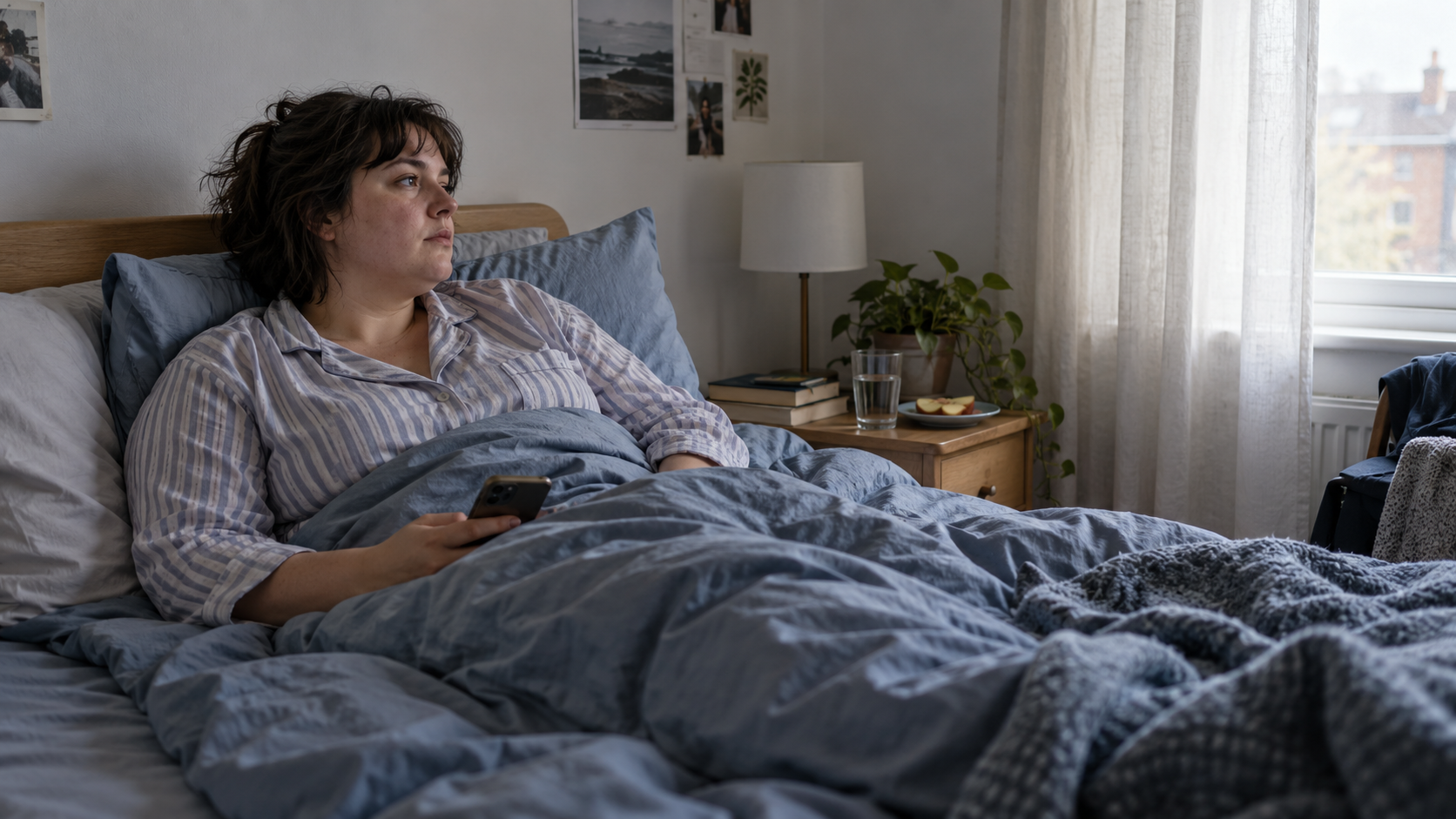
If “bedrotting” describes your day, the first question is what you need from that time: sleep, relief from demands, comfort, company or help with feeling unwell. Staying in bed is a behavior, not an explanation. Neither a social media trend nor someone else's productive weekend can decide whether your body needs rest.
This article uses the word as an informal description of spending an extended period awake in bed, often with a screen. It is not a diagnostic category here. People who are ill, disabled, recovering or following medical advice may have very different needs from someone choosing a quiet morning after a busy week.
Ask what the rest is doing for you
Consider an invented example. Maya intends to have a slow Sunday. She watches something she enjoys, answers a friend and eats breakfast. Later, she keeps scrolling despite no longer enjoying it and misses the lunch she wanted. The morning and the afternoon deserve separate descriptions; one label hides the change.
You could ask: Am I choosing this now? Have I had food and water? Am I missing something important to me? Do I feel able to change activities if I want to? These are practical prompts, not a checklist that diagnoses depression or determines who has rested enough.
Do not make standing up the only acceptable measure of a good day. A person with restricted mobility might choose a conversation, a meal, an audiobook or a change of activity in the same bed. The question is whether the day supports their needs within their actual capacity.
Awake rest and sleep are different
Lying down with a phone does not necessarily mean you are getting sleep. NHLBI guidance recommends making enough time for sleep and keeping a reasonably regular sleep schedule. It also suggests a quieter period before bedtime with less bright artificial light. NHLBI
That guidance is not a moral rule about bedrooms. You might have only one private space, work nights, share a home, or need a device for accessibility. Look for the part you can adapt: an ending for an engrossing session, a quieter activity, or a routine suited to your shift rather than somebody else's clock.
Chang and colleagues found that evening reading on a light-emitting device affected sleep-related measures compared with print in a controlled laboratory study. That does not quantify the effect of your exact setup or show that every period of daytime screen use in bed is harmful. Chang et al.
A smaller next step can be enough
If you want to change activities, choose something reachable from where you are. You might arrange a drink, send a message asking for company, or move to another comfortable place if that is possible for you. If you want to keep watching, choosing one specific programme may fit your intention better than opening an endless feed.
Treat these as options, not obligations. A plan can include rest. It can also include asking someone to help with the demands that made the retreat feel necessary. A screen setting cannot solve an impossible workload, an inaccessible environment or a lack of support.
If you are supporting someone else, ask what would make the next hour easier. Bringing a meal or helping with one task may be more useful than commenting on how long they have been in bed. Avoid diagnosing them from a photograph or a usage report.
When the pattern needs more attention
Persistent low mood, loss of interest and difficulty with everyday functioning warrant a conversation with a healthcare professional. NIMH also describes fatigue and sleep changes among possible depression symptoms; none is specific enough to diagnose a person from this behavior alone. NIMH
You do not need to wait until a personal routine experiment succeeds or fails before asking for help. Note when the change began, what is becoming difficult and any relevant illness or medication changes. Your clinician can consider explanations that a trending term cannot.
If you feel unsafe or are thinking about harming yourself, seek urgent help through local emergency or crisis services and contact someone you trust. A conversation about rest should make it easier to get appropriate support, not turn suffering into a lifestyle challenge.
Sources and scope
- NHLBI. Sleep Deprivation and Deficiency: Healthy Sleep Habits. Official guidance.
- Chang, A.-M., et al. (2015). Evening use of light-emitting eReaders negatively affects sleep, circadian timing, and next-morning alertness. PubMed.
- NIMH. Depression. Revised 2024. Official guidance.
Sources supplied with this local draft; article claims and source admission remain subject to scientific review. These external works do not validate HDI’s questionnaire or establish the effectiveness of its programme. No external organisation’s endorsement is implied.