Adults and older teenagers worried about concentration after scrolling · 4 min read
Brain rot: what the phrase means, and what it cannot tell you
Separate a popular expression from evidence about attention, sleep and the online activities filling your day.
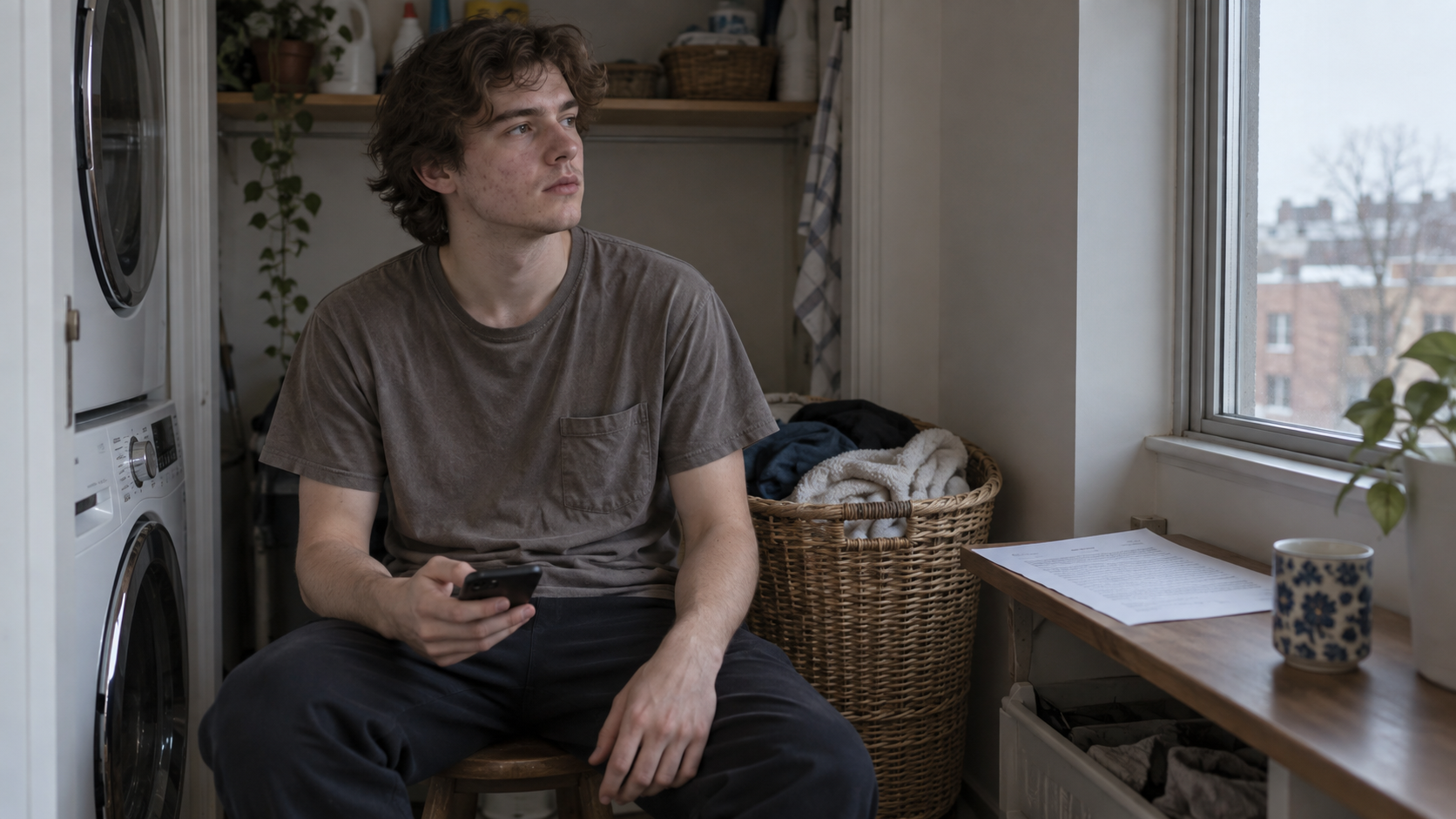
“Brain rot” is a vivid way to describe feeling mentally dull after too much unchosen content. It does not tell you that your brain is literally deteriorating. The useful next step is to name the difficulty: tiredness, repeated interruption, trouble starting a task, or time spent on something you did not enjoy.
Oxford University Press selected the expression as its 2024 Word of the Year. Its account describes a perceived deterioration linked to consuming trivial material, particularly online. That is a description of language and cultural concern, not a medical finding. Oxford University Press
A feeling is real without the metaphor being literal
Imagine this fictional scene. Noah watches a run of short videos while waiting for laundry. When the cycle ends, he opens a long message from a friend but keeps returning to the feed. He says his brain has turned to mush. What we actually know is narrower: at this moment he is finding it hard to stay with the message.
That account is worth taking seriously. It still does not establish what caused the difficulty, whether it lasts beyond the evening, or whether it reflects any lasting change. A rough night, an exhausting day, a difficult message and repeated alerts are different possibilities to explore.
Try replacing the label with a sentence that contains a time and an activity. “After scrolling in bed, I was too tired to read” is more informative than “I have brain rot”. It also leaves open more than one way to respond.
Attention findings are more specific than internet headlines
Stothart and colleagues experimentally studied incoming phone notifications during a sustained-attention task. Alerts could interfere even without participants opening their phones. The study did not test whether humorous videos make people less intelligent or permanently shorten attention spans. Stothart et al.
Keep that scale of inference in mind when reading a claim about the brain. A test of errors on a task is not automatically a test of brain injury. A report that two habits occur together is not proof that one causes the other. Stronger language requires stronger, directly relevant evidence.
For your own day, an interruption is something concrete you can examine. Consider one task you actually want to finish, and which nonurgent alerts could wait until it is done. Keep accessibility tools and necessary communication available. There is no need to make the entire day an endurance test.
Sleep offers another question to ask
In a controlled experiment, Chang and colleagues compared evening reading on a light-emitting device with print reading and found differences in sleep-related outcomes. This was a particular exposure under laboratory conditions, not a test of every current screen or app. Chang et al.
The practical question is whether your current evening routine leaves enough opportunity for sleep. If a feed keeps replacing the time you intended to wind down, you can address that pattern without claiming that the content has damaged your brain. It may help to choose an ending before the first video starts and put an easier next activity within reach.
Choose an experiment that matches the problem
If you dislike the content itself, try changing what appears: unfollow an account, open a specific creator directly, or choose something you actively want to read or watch. If the problem is staying longer than intended, define the next event in your evening. If the problem is interruption, focus on the alerts rather than judging every minute online.
These are editorial suggestions, not a tested cure for “brain rot”. Pick one, then notice whether the particular difficulty changes. You might finish the message but still enjoy the videos later. That is a more informative outcome than deciding that all entertainment must become educational.
Avoid turning the phrase into an insult toward someone else's interests, language or generation. A playful meme and a frustrating habit are not the same thing. Nor does being interested in a niche online community establish anything about intelligence.
If concentration problems are persistent, new, worsening or interfering with everyday functioning, discuss them with a healthcare professional. Bring examples and the timeline rather than assuming the internet expression supplies the explanation. The point is to understand the difficulty well enough to respond to it.
Sources and scope
- Oxford University Press (2024). Brain rot named Oxford Word of the Year. Language source.
- Stothart, C., et al. (2015). The attentional cost of receiving a cell phone notification. Author account.
- Chang, A.-M., et al. (2015). Evening use of light-emitting eReaders negatively affects sleep, circadian timing, and next-morning alertness. PubMed abstract.
Sources supplied with this local draft; article claims and source admission remain subject to scientific review. These external works do not validate HDI’s questionnaire or establish the effectiveness of its programme. No external organisation’s endorsement is implied.