Adults concerned about their own phone use · 4 min read
Phone addiction: what to notice before you count the minutes
A practical way to distinguish necessary phone use from a pattern that keeps displacing everyday life.
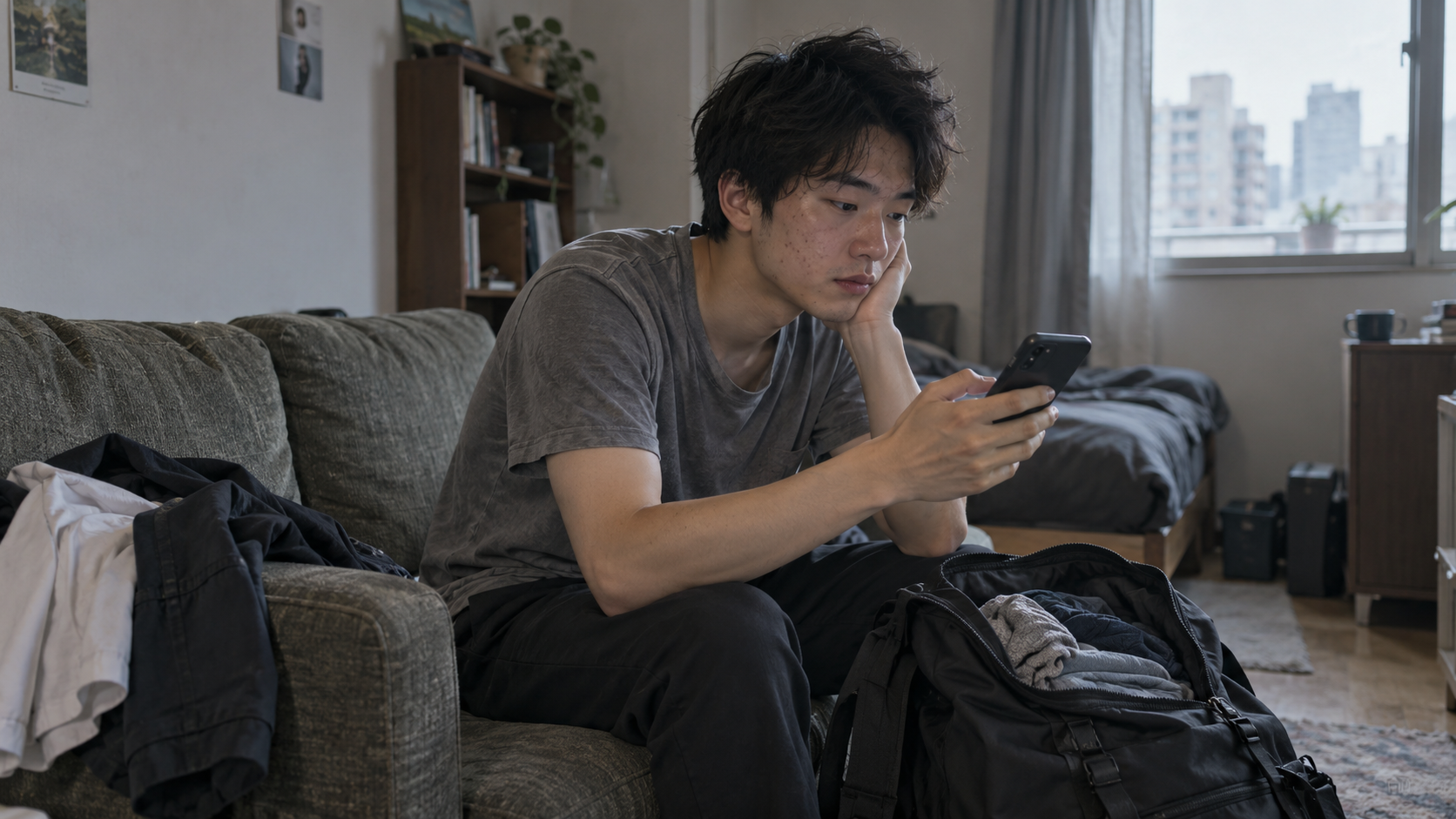
If you are searching for “phone addiction”, start with what your phone use is doing to your day. A long screen-time total cannot tell you whether you were working, talking to someone you love, navigating a journey or repeatedly opening something you meant to close. Your difficulty deserves attention without having to prove that you fit an addiction label.
This article uses the phrase as everyday language, not as a diagnosis. The World Health Organization describes specific requirements for gaming disorder, including substantial impairment; those requirements are about gaming and cannot simply be transferred to every activity on a phone. WHO
Look for the moment your intention changes
Consider an invented example. Sam picks up a phone to check tomorrow's bus. Forty minutes later, Sam is watching clips and has not packed a bag. The problem is not that the journey search happened on a screen. It is that one useful action became a different activity without a clear decision.
Try describing your own example with ordinary details: what you opened, what happened next, what you had intended to do, and what was left undone. “I missed bedtime twice after opening the feed” gives you something specific to work with. “My brain is addicted” leaves much less room for a practical next step.
Also notice the useful parts. You may need your phone for accessibility, shift changes, caring responsibilities or friendships across distance. An experiment should preserve those functions. A plan that requires ignoring an urgent call is a poor fit, even if it looks impressive on a screen-time chart.
Interruptions can matter before you touch the screen
In a laboratory experiment, Stothart and colleagues found that incoming notifications disrupted performance on an attention task even when participants did not handle their phones. The result concerns a particular task, not a diagnosis or permanent damage. Stothart et al.
That distinction changes the question. Instead of asking only whether you have enough willpower to ignore the device, ask whether every application needs permission to interrupt the activity in front of you. A shopping offer, a group conversation and a call from a person you support do not need identical settings.
Make a short list of interruptions you genuinely need to receive promptly. Keep a reliable route for those. Consider scheduling or reducing a small category of nonurgent alerts, rather than making yourself unreachable.
Try a change you can actually judge
For the next few days, choose one recurring situation. Perhaps it is breakfast, a journey as a passenger, or the first part of an evening at home. Decide what you want that period to contain. “Eat without repeatedly checking the feed” is clearer than “be better with technology”.
An optional experiment is to put the phone somewhere slightly less convenient during that situation, while keeping essential calls available. Another is to open the particular service you need directly, instead of entering through a feed. These are practical suggestions to test, not a validated treatment package.
Write down a small outcome that matters: whether breakfast felt less interrupted, whether you completed the bus search, or whether bedtime happened when intended. You do not need a public streak, an expensive tracker or a perfect day. If the change makes caring or work harder, adjust it.
Total silence is not the only option
Fitz and colleagues tested notification schedules in a field experiment. Predictable batches showed some benefits, while removing notifications entirely also had costs, including greater anxiety and fear of missing out. This is not a promise that one schedule suits everyone. Fitz et al.
If you find yourself checking constantly because you worry about missing someone, discuss expectations with that person. Agreeing how urgent messages arrive may be more workable than repeatedly tightening an app limit. On-call workers and carers need arrangements that respect their responsibilities.
If repeated efforts leave substantial disruption to sleep, relationships, work or safety, consider talking with a qualified professional. Bring concrete examples rather than a self-diagnosis. You can ask for help with the pattern and its context while remaining unsure what to call it.
Sources and scope
- WHO. Gaming disorder: official ICD-11 explanation. Guidance.
- Stothart, C., Mitchum, A., & Yehnert, C. (2015). The attentional cost of receiving a cell phone notification. Author's study account; DOI 10.1037/xhp0000100.
- Fitz, N., et al. (2019). Batching smartphone notifications can improve well-being. Institutional abstract; DOI 10.1016/j.chb.2019.07.016.
Sources supplied with this local draft; article claims and source admission remain subject to scientific review. These external works do not validate HDI’s questionnaire or establish the effectiveness of its programme. No external organisation’s endorsement is implied.